EN
EN

- Overview
- Recommended Products
- Structural Design: The spoke-type load cell features an integrated spoke structure where the rim and hub are seamlessly connected by multiple spokes, with heights typically ranging from 20 to 80mm. This design ensures uniform rigidity distribution and delivers exceptional resistance to eccentric loads and lateral forces—capable of withstanding eccentric load forces up to ±15% to ±20% of the rated load. The spoke-type geometry effectively disperses the impact of non-axial loads, providing superior force-bearing stability and measurement consistency.
- Accuracy Performance: The CZL204 load cell maintains accuracy classifications from C2 to C6, with mainstream models achieving C3 certification. This spoke-type load cell delivers nonlinearity error ≤ ±0.02%FS, repeatability error ≤ ±0.01%FS, and zero drift controlled within ≤ ±0.003%FS/℃, ensuring excellent accuracy retention under dynamic intermittent load scenarios and industrial measurement applications.
- Material and Protection: The elastomer utilizes alloy steel (yield strength ≥ 900MPa) or premium 304/316L stainless steel construction, with surfaces passivated or nickel-plated for enhanced corrosion resistance. The wheel load cell typically achieves IP66/IP67 protection classification, with specialized custom models reaching IP68, perfectly suited for humid and dusty industrial production environments.
- Installation Compatibility: Upper and lower end faces employ bolt fixing or flange connection methods, with certain models supporting thread adaptation. The minimal installation height of 18mm makes the spoke-type load cell ideal for confined spaces primarily subjected to vertical forces. The CZL204 can be deployed independently or in multiple combinations for expanded measurement capacity.
- Weight/Force Detection: The spoke-type load cell CZL204 supports both static and quasi-dynamic weighing applications with response times ≤ 8ms. The measurement range spans 0.1t to 200t, with typical applications concentrated in the 1t to 50t range, and specialized customized models available to meet requirements exceeding 200t.
- Signal Output: The wheel load cell provides standard analog signals (4-20mA, 0-5V, 0-10V) and digital signals (RS485/Modbus RTU). Intelligent model variants support CANopen protocol and enable direct integration with PLC, DCS, and comprehensive weighing management systems for seamless industrial automation.
- Advanced Capabilities: The CZL204 integrates wide temperature range compensation (-30℃ ~ 80℃), provides robust overload protection (150% to 250% of rated load), and explosion-proof variants receive certification to Ex d IIB T4 Ga/Ex ia IIC T6 Ga standards. Select models feature cable anti-break design for enhanced durability in challenging operational conditions.
- Long-Term Reliability: The spoke-type load cell demonstrates fatigue life ≥ 10⁷ cycles, maintaining excellent continuous operation stability under rated load conditions. Annual drift remains ≤ ±0.015%FS, positioning the CZL204 as an ideal choice for extended continuous operation across demanding industrial measurement scenarios.
- Eccentric Load Measurement Accuracy: Traditional sensors struggle with non-axial loads, but the spoke-type load cell CZL204 optimizes force transmission through its innovative spoke structure, controlling eccentric load error within ±0.03% FS. This breakthrough solves critical accuracy challenges in applications involving silo eccentricity and material impact scenarios.
- Space-Constrained Installation: The wheel load cell's distinctive "short and thick" structural characteristics (diameter 50-200mm, height 20-80mm) address installation challenges in severely limited spaces such as embedded equipment, compact weighing instruments, and integrated modules, eliminating the need for additional redundant space allocation.
- Vibration and Impact Resistance: The spoke-type load cell features more uniform stress distribution compared to traditional column-type sensors, improving impact resistance by over 30%. This enhancement effectively prevents permanent sensor deformation during mechanical vibration and material drop impact events, significantly extending operational service life.
- Environmental Adaptability: Through material upgrades (316L stainless steel) and enhanced protection (IP68 certification), the CZL204 addresses corrosion challenges in humid and chemically aggressive environments such as food processing and chemical batching operations, while explosion-proof variants fulfill flammable and explosive scenario safety requirements.
- System Integration Simplification: The spoke-type load cell supports multiple signal output types and mainstream industrial communication protocols, resolving compatibility issues with diverse PLC brands (Mitsubishi, Schneider, etc.) and weighing instruments, substantially reducing intermediate equipment investments such as signal converters.
- Installation Convenience: The CZL204 features standardized end-face mounting holes, precise positioning reference surfaces, and dedicated mounting gaskets with fastening bolts, enabling accurate horizontal positioning without specialized calibration tools. A single technician can complete installation and commissioning of an individual wheel load cell within 30 minutes.
- Operation and Calibration: The spoke-type load cell supports one-button zeroing and streamlined two-point calibration procedures, requiring only standard weights at 20% and 100% of rated load. Digital model variants enable remote calibration and parameter configuration through dedicated host computer software, dramatically reducing operational complexity and training requirements.
- Low Maintenance Cost: The fully sealed spoke-type construction minimizes dust and moisture intrusion, maintaining an annual average failure rate ≤ 0.3%. Anti-loosening terminal block design and waterproof/dustproof cable sealing require only quarterly cleaning and zero-point verification during routine maintenance, significantly reducing operational workload.
- Data Reliability: Static weighing data fluctuation remains ≤ ±0.005%FS with no discernible lag in quasi-dynamic applications. Digital model variants feature integrated fault diagnosis modules providing real-time feedback on overload conditions, electrical disconnection, abnormal temperature states, and other operational anomalies, facilitating rapid problem identification and resolution.
- System Compatibility: The CZL204 demonstrates compatibility with over 95% of weighing control devices currently in operation, supporting automatic load distribution when multiple sensors operate in parallel, eliminating additional equalizer equipment requirements. Intelligent model variants connect directly to industrial IoT platforms for comprehensive remote data monitoring and predictive maintenance capabilities.
- Platform and Floor Scales: The spoke-type load cell CZL204 serves as the core sensing unit for 1-50t platform scales and floor scales, with its compact structure enabling internal installation within weighing equipment. Anti-eccentric load characteristics ensure measurement accuracy consistency across different weighing positions, ideal for supermarket pricing platforms and workshop material handling scales.
- Specialized Weighing Solutions: The wheel load cell supports explosion-proof electronic scales and corrosion-resistant chemical weighing equipment. 316L stainless steel construction combined with explosion-proof certification satisfies specialized industry requirements, while the spoke-type architecture accommodates diverse equipment structural designs.
- Loader and Shovel Applications: Installation within hydraulic systems enables indirect material weighing through hydraulic pressure detection. The spoke-type load cell's robust anti-vibration and impact capabilities excel in harsh construction machinery environments, delivering accuracy up to ±0.5%FS while withstanding severe operational stresses.
- Hydraulic Safety Systems: The CZL204 monitors working resistance in mine hydraulic supports using explosion-proof spoke-type sensors rated IP67, delivering stable long-term operation in dusty, humid environments while providing critical safety data for support system performance.
- Material Tank Weighing: Pharmaceutical and food industry batching tanks employ four symmetrically installed spoke-type load cell units. The anti-eccentric load characteristics eliminate measurement errors caused by material tank center-of-gravity offset, enabling precise automated feeding through integrated control system coordination.
- Packaging Equipment Integration: High-speed particle packaging and liquid filling machines utilize the wheel load cell's dynamic weighing capability with response time ≤ 8ms to meet rigorous production speeds. Accuracy maintained within ±0.1%FS ensures packaging measurement compliance and regulatory adherence across food and pharmaceutical sectors.
- Mechanical Testing Machines: The spoke-type load cell delivers static force measurement in material mechanics testing applications. C2-level accuracy certification satisfies rigorous scientific research requirements, while the spoke structure's uniform stress distribution ensures superior data repeatability and measurement precision.
- Fatigue Testing Systems: Component fatigue life evaluation relies on the CZL204's remarkable cycle capability (≥10⁷ cycles) and stable mechanical properties, perfectly meeting extended testing experiment requirements in materials science and engineering research.
- Food and Pharmaceutical Production: Hygienic-grade 316L stainless steel spoke-type load cell variants feature polished surfaces (Ra ≤0.8μm), ensuring GMP standard compliance. These units facilitate raw material weighing and finished product metering while supporting comprehensive cleaning and sterilization procedures essential in food and pharmaceutical manufacturing.
- Mining and Metallurgical Operations: High-temperature spoke-type load cell models with compensation range -40℃~120℃ support ore sorting equipment and metallurgical furnace hopper weighing, reliably adapting to high-temperature, dusty environment requirements while maintaining measurement accuracy.
- Preparation: Clean installation surfaces to ensure flatness with error ≤0.05mm/m and freedom from burrs. Inspect the CZL204 for elastomer deformation and cable integrity, verifying mounting bolt specification compatibility with the spoke-type load cell design.
- Installation: Position the wheel load cell vertically to ensure axial load transmission. Apply specified torque (15-40N·m for alloy steel, 10-30N·m for stainless steel) using a calibrated torque wrench, avoiding over-tightening that could damage the elastomer structure.
- Wiring: Follow analog signal color conventions (red=power +, black=power -, green=signal +, white=signal -) or connect digital signals according to Modbus protocol specifications. Route wiring ≥15cm away from electromagnetic interference sources such as frequency converters and high-voltage cables.
- Protection: Utilize waterproof junction boxes for outdoor installations and apply dust covers to exposed sensor areas. Apply protective anti-corrosion coatings to non-stressed surfaces in chemically aggressive environments.
- Zero Calibration: Preheat the spoke-type load cell for 20 minutes before executing zero calibration commands through the weighing instrument or host computer software, ensuring zero output remains within ±0.002%FS range.
- Load Calibration: Apply standard weights sequentially at 20% and 100% of rated load, recording corresponding sensor output signal values. Use calibration software to correct linear errors, ensuring all load point errors remain within applicable accuracy class tolerances (e.g., ≤±0.02%FS for C3 classification).
- Dynamic Testing: Configure instrument filtering parameters (8-15Hz filtering frequency) for quasi-dynamic applications, testing response speed and data stability while preventing signal fluctuations from material impact events.
- Inspection Schedule: Clean dust and contaminants monthly, verify wiring terminal tightness, conduct zero calibration semi-annually, and perform comprehensive full-scale calibration and performance testing annually.
- Fault Resolution: Address data drift by verifying stable power supply voltage (10-30V DC) and installation surface levelness. Investigate abnormal signals by checking for cable damage or strain gauge overload conditions, replacing the spoke-type load cell if necessary.
- Range Selection: Choose models with capacity 1.3-1.6 times actual maximum load (for 10t maximum load, select a 13-16t spoke-type load cell), maintaining sufficient overload margin against impact loading.
- Accuracy Requirements: Select C3 class (error ≤±0.02%FS) for industrial metrology, C2 class (error ≤±0.01%FS) for scientific research, and C6 class (error ≤±0.03%FS) for general monitoring applications.
- Signal Selection: Traditional systems benefit from analog signals (4-20mA), intelligent IoT systems utilize digital signals (RS485), and construction machinery often employ CANopen protocol-compatible wheel load cell models.
- Temperature Considerations: Normal conditions (-30℃~60℃) use standard models, high-temperature scenarios (60℃~120℃) require high-temperature compensated spoke-type load cells, and extreme cold (-50℃ to -30℃) demands specialized low-temperature resistant variants.
- Material Selection: Dry environments use alloy steel, humid or mildly corrosive conditions specify 304 stainless steel, and highly corrosive environments (acid-base solutions) require 316L stainless steel or specialized Hastelloy materials.
- Protection Rating: Indoor dry settings require ≥IP66, outdoor/humid environments need ≥IP67, and underwater or dust-intensive applications demand ≥IP68 rated wheel load cell solutions.
- Installation Methods: Space-limited applications select end-face bolt connections, heavy-load scenarios employ flange connections, and eccentric load conditions prefer enhanced spoke-type load cell models with eccentric load error ≤±0.01%FS.
- System Compatibility: Verify sensor signal compatibility with existing instrument and PLC communication protocols. Multiple sensor configurations select digital models supporting individual address coding to prevent signal conflicts.
- Specialized Certifications: Explosion-proof scenarios require appropriate explosion-proof grades (Ex d I for coal mines, Ex ia IIC T6 for chemical industry), food industry applications need FDA/GMP certification, and metrology applications require CMC certification compliance.
Product Introduction
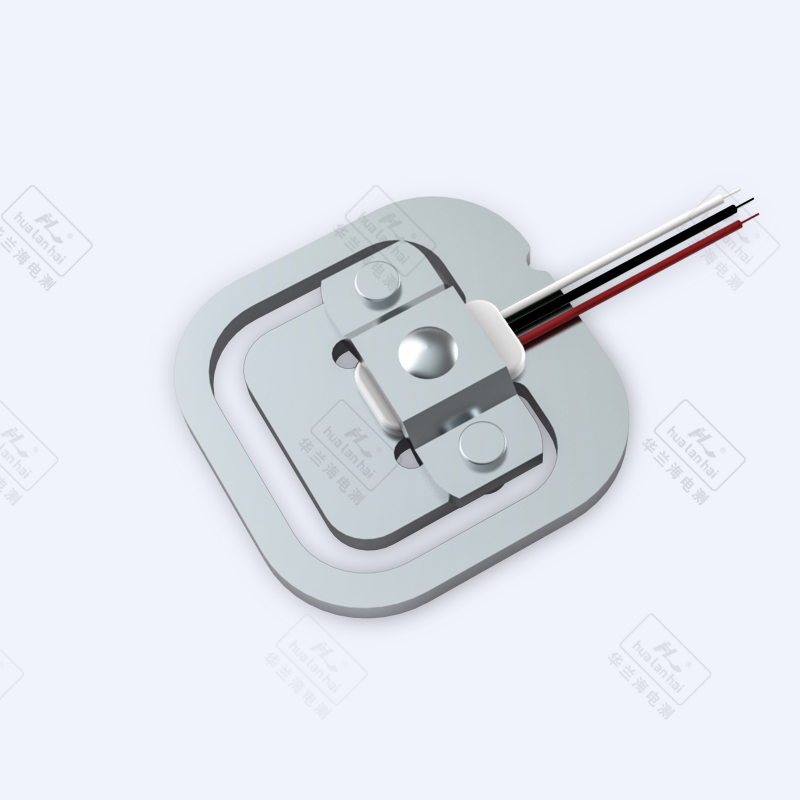
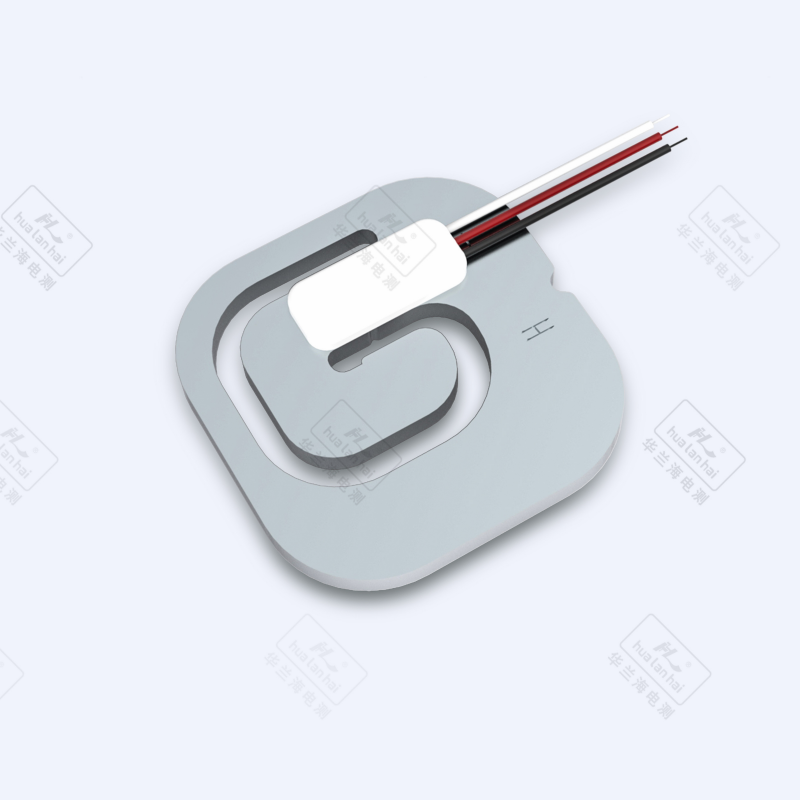
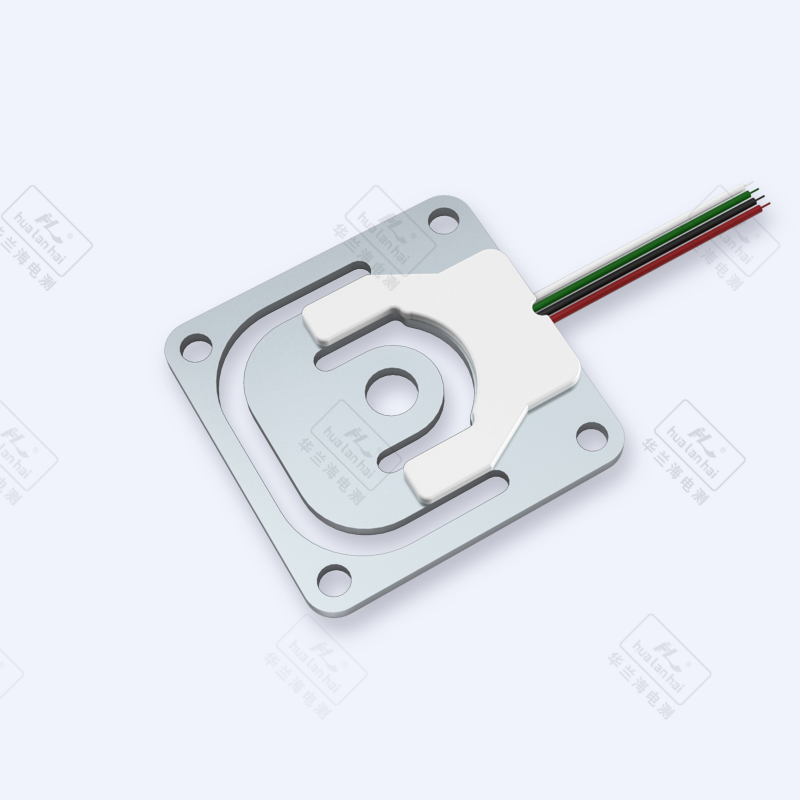
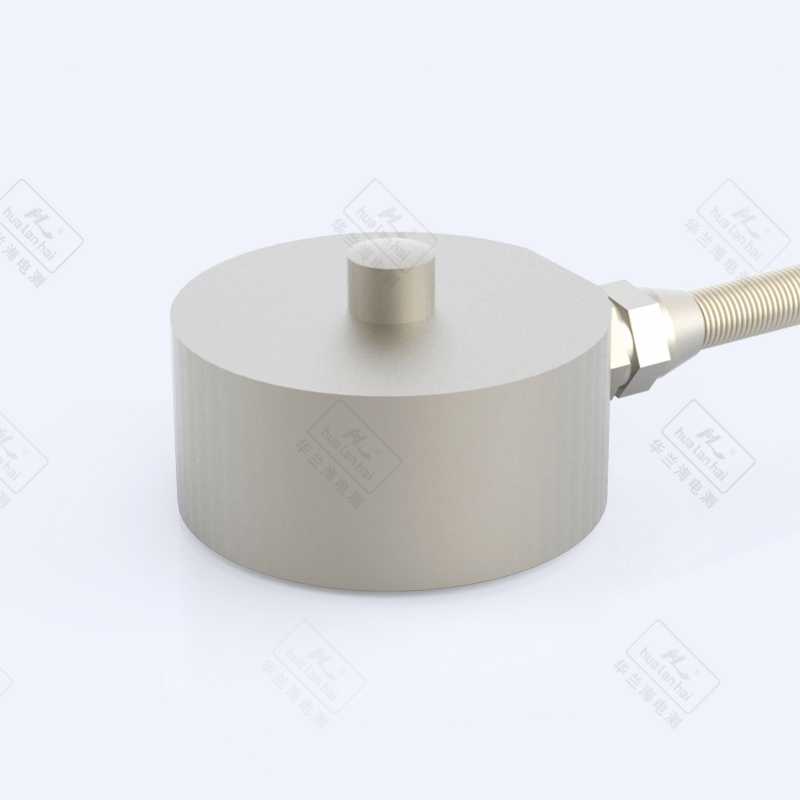
The spoke-type load cell CZL204 represents an advanced force-sensitive detection element engineered on strain-resistive principles, featuring a distinctive spoke-shaped elastomer core structure. When subjected to applied force, the elastomer's deformation drives integrated strain gauges to produce measurable resistance changes, which are then converted into precise electrical signals. This innovative spoke-type load cell design combines a compact structural footprint with exceptional anti-eccentric load capacity, making it ideal for weighing applications requiring medium to low loads in space-constrained environments. The CZL204 wheel load cell offers comprehensive technical specifications to support product selection, technical evaluation, and customized solution development across diverse industrial sectors.
1. Product Features and Functions
Core Features
Core Function
2. Core Issues Resolved
3. User Experience
4. Typical Application Scenarios
1) Industrial Weighing Equipment Manufacturing
2) Engineering and Construction Machinery
3) Industrial Process Control
4) Materials Testing and Research Equipment
5) Specialized Industry Applications
5. Usage Instructions (Practical Guide)
1) Installation Process
2) Calibration and Debugging
3) Routine Maintenance
6. Selection Method (Precisely Matching Requirements)
1) Determination of Core Parameters
2) Environmental Adaptability Selection
3) Installation and Compatibility Considerations
Summary
The CZL204 spoke-type load cell combines "exceptional anti-eccentric load capacity, compact structural design, and outstanding stability" as core competitive advantages, primarily addressing precise weighing requirements in medium to low load applications, space-constrained installations, and eccentric load conditions. User experience emphasizes effortless installation, minimal maintenance requirements, and dependable measurement performance. Successful selection requires first clarifying four essential requirements—range, accuracy, installation space, and environmental conditions—then making informed decisions incorporating system compatibility and specialized functions. During operational deployment, strictly observe axial force installation principles and maintain rigorous calibration protocols to ensure sustained stable performance. The wheel load cell remains ideally suited for industrial weighing instruments, construction machinery, process control applications, and other sectors requiring reliable medium to low load measurement solutions with specialized installation constraints.
Detail Display
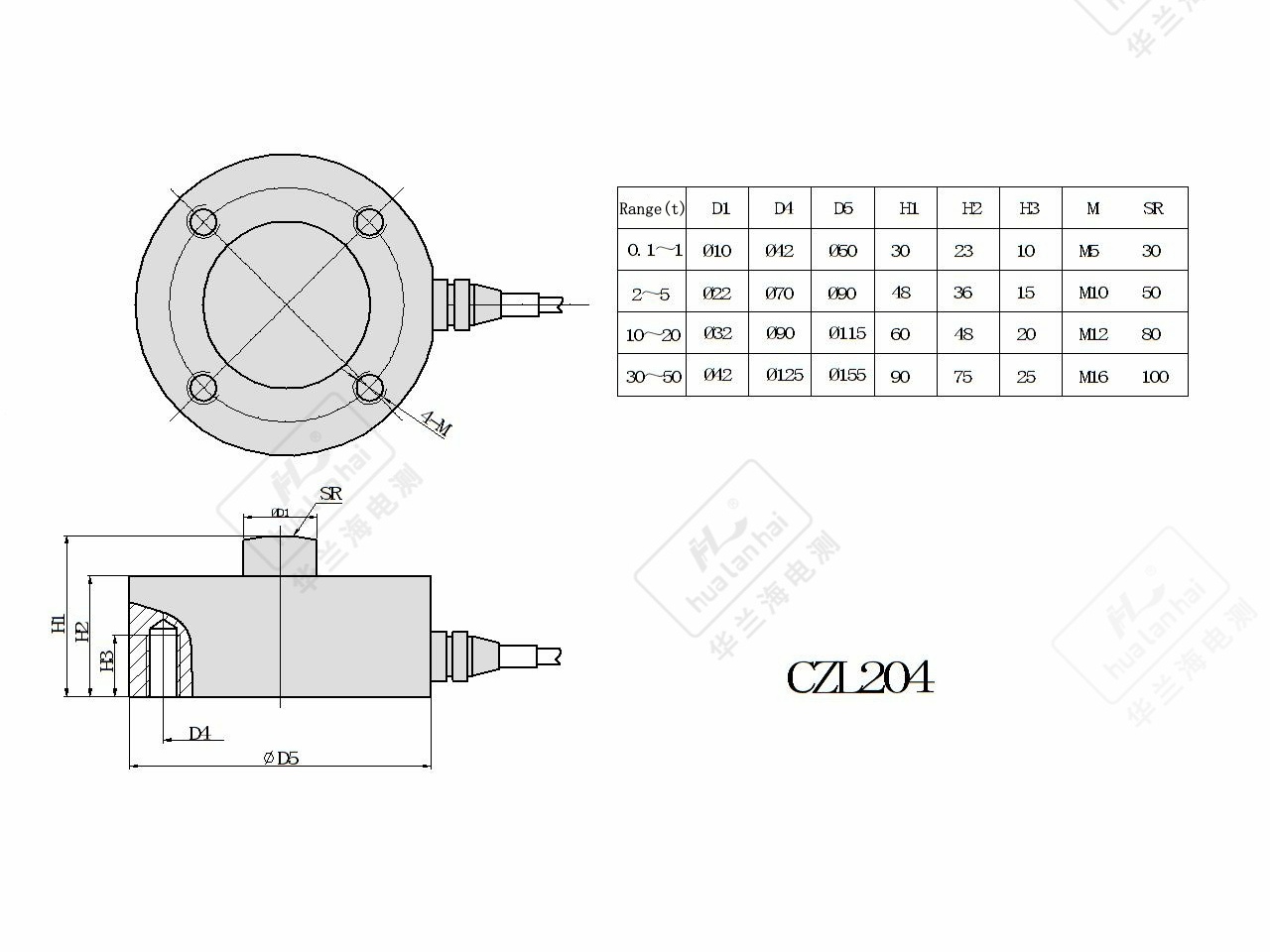
Parameters
| Parameter Name | Parameter Value |
| Sensor range | 100kg ~ 500kg |
| Accuracy class | C5 |
| Comprehensive error | ±0.2% FS |
| Output sensitivity | 2.0±0.04 mV/V |
| creep | ±0.03% FS/30min |
| Zero output | ±1.0% FS |
| Input impedance | 700±3Ω |
| Output impedance | 700±3Ω |
| insulation resistance | ≥5000 MΩ(100VDC) |
| Influence of zero temperature | ±0.05% FS/10℃ |
| Sensitivity temperature effect | ±0.03% FS/10℃ |
| Temperature compensation range | -10℃ ~ +40 ℃ |
| Operating temperature range | -30℃ ~ +70 ℃ |
| Excitation voltage | 10VDC ~ 12VDC |
| Safe overload range | 150% |
| Limit overload range | 200% |
| Material Science | Aluminum Alloy |
| Protection level | IP66 |