Advanced Strain Gauges for Composites - Precision Measurement Solutions for Structural Monitoring

All Categories

Get a Free Quote

Our representative will contact you soon.
Email
Name
Company Name
WhatsApp
Message
0/1000

strain gauges for composites

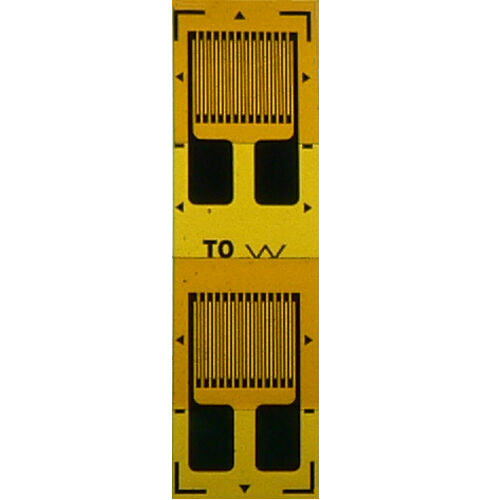
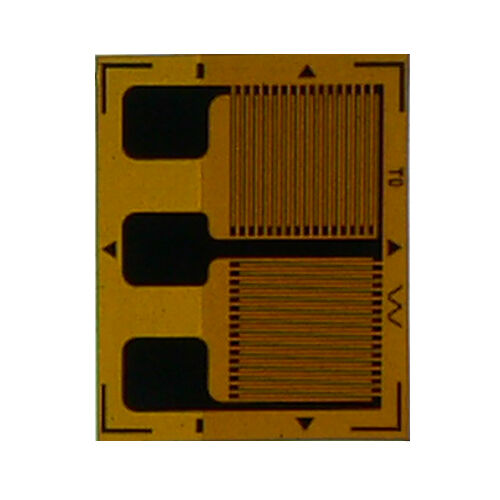
Strain gauges for composites represent a specialized measurement technology designed to monitor mechanical deformation and stress distribution in composite materials. These precision instruments serve as critical components in structural health monitoring, quality control, and performance evaluation of composite structures across various industries. The primary function of strain gauges for composites involves detecting minute changes in material dimensions when subjected to external forces, providing real-time data about structural integrity and mechanical behavior. Unlike traditional strain measurement devices, these specialized gauges are engineered to accommodate the unique characteristics of composite materials, including their anisotropic properties, layered construction, and complex stress patterns. The technological features of strain gauges for composites include enhanced adhesion systems that bond effectively with resin matrices, temperature compensation mechanisms to maintain accuracy across varying environmental conditions, and flexible substrates that conform to curved composite surfaces. Advanced models incorporate wireless transmission capabilities, enabling remote monitoring of structures in challenging locations. These instruments utilize resistance-based measurement principles, where mechanical strain causes proportional changes in electrical resistance, which are then converted into precise strain readings through sophisticated signal conditioning systems. Applications of strain gauges for composites span numerous sectors, including aerospace engineering for aircraft wing monitoring, automotive industry for carbon fiber component testing, marine applications for boat hull stress analysis, and renewable energy systems for wind turbine blade evaluation. In research and development environments, these gauges facilitate material characterization studies, helping engineers optimize composite layup sequences and fiber orientations. Civil engineering projects utilize strain gauges for composites in bridge monitoring systems, particularly for structures incorporating fiber-reinforced polymer reinforcement. The construction industry employs these devices for evaluating composite strengthening systems in building retrofits, while sports equipment manufacturers use them to enhance performance characteristics of composite products like tennis rackets, golf clubs, and bicycle frames.

New Products

Strain gauges for composites deliver exceptional measurement precision that significantly exceeds conventional monitoring methods, providing engineers and researchers with accurate data essential for critical structural assessments. These advanced devices offer superior sensitivity to detect microscopic deformations that might indicate early-stage structural problems, enabling preventive maintenance strategies that reduce costly repairs and extend component lifespan. The lightweight design of strain gauges for composites ensures minimal impact on the host structure's weight distribution and aerodynamic properties, making them ideal for aerospace applications where every gram matters. Their compact footprint allows installation in confined spaces without interfering with normal operations or aesthetic considerations. These instruments demonstrate remarkable durability under extreme environmental conditions, maintaining consistent performance through temperature fluctuations, humidity variations, and exposure to corrosive substances commonly encountered in industrial settings. The versatile mounting options accommodate various composite geometries, from flat panels to complex curved surfaces, ensuring comprehensive monitoring coverage across diverse structural configurations. Installation procedures for strain gauges for composites are straightforward and cost-effective, requiring minimal specialized equipment and reducing project implementation timelines. The technology supports both wired and wireless data transmission, providing flexibility in system design and eliminating the need for extensive cable routing in remote monitoring applications. Real-time data acquisition capabilities enable immediate response to critical stress conditions, enhancing safety protocols and operational efficiency. These gauges exhibit excellent long-term stability, maintaining calibration accuracy over extended periods without frequent recalibration requirements, reducing maintenance costs and operational downtime. The compatibility with standard data acquisition systems simplifies integration into existing monitoring infrastructure, eliminating the need for costly system overhauls. Advanced signal processing algorithms filter environmental noise and provide clean, reliable measurements even in electrically challenging environments. The technology supports multi-point monitoring configurations, enabling comprehensive stress mapping across large composite structures with synchronized data collection. Cost-effectiveness becomes apparent through reduced inspection frequencies, extended component service life, and prevention of catastrophic failures that could result in significant financial losses and safety hazards.

Tips And Tricks

Conquering The

25

Nov

Conquering The "Bottleneck" Technologies Is The Greatest Motivation

View More

Get a Free Quote

Our representative will contact you soon.
Email
Name
Company Name
WhatsApp
Message
0/1000

strain gauges for composites

Advanced Adhesion Technology for Superior Bonding Performance

Advanced Adhesion Technology for Superior Bonding Performance

The sophisticated adhesion technology incorporated in strain gauges for composites represents a breakthrough in measurement reliability and longevity. This innovative bonding system utilizes specially formulated adhesives that create molecular-level bonds with composite resin matrices, ensuring permanent attachment that withstands extreme mechanical stresses, thermal cycling, and chemical exposure. The adhesion technology addresses the unique challenges presented by composite surfaces, which often exhibit low surface energy and complex chemical compositions that can interfere with traditional bonding methods. Advanced surface preparation protocols work in conjunction with multi-layer adhesive systems to maximize bond strength and eliminate delamination risks. The technology incorporates flexible bonding agents that accommodate the differential thermal expansion between the gauge substrate and composite host material, preventing stress concentrations that could compromise measurement accuracy. Specialized primer systems enhance chemical compatibility with various composite resin types, including epoxy, polyester, vinyl ester, and thermoplastic matrices. The adhesion technology demonstrates exceptional resistance to environmental degradation, maintaining bond integrity under ultraviolet radiation, moisture absorption, and temperature extremes ranging from cryogenic conditions to elevated service temperatures. This superior bonding performance translates directly into measurement reliability, as consistent mechanical coupling between the strain gauge and composite ensures accurate strain transfer without signal drift or calibration changes over time. The technology supports installation on both cured and uncured composite surfaces, providing flexibility in manufacturing integration and retrofit applications. Quality control procedures verify bond strength through standardized testing protocols, ensuring each installation meets stringent performance criteria. The advanced adhesion system reduces installation time compared to mechanical attachment methods while providing superior measurement sensitivity and eliminating potential stress concentration points that could initiate crack formation in the composite structure.
Precision Temperature Compensation for Accurate Measurements

Precision Temperature Compensation for Accurate Measurements

Temperature compensation technology in strain gauges for composites ensures measurement accuracy across wide temperature ranges, addressing one of the most significant challenges in composite structural monitoring. This sophisticated system accounts for the thermal expansion differences between the gauge material, adhesive layer, and composite substrate, preventing temperature-induced measurement errors that could mask actual mechanical strains or create false readings. The compensation mechanism incorporates multiple temperature sensors strategically positioned to monitor local thermal conditions, combined with advanced algorithms that calculate and correct for thermal effects in real-time. The technology addresses the complex thermal behavior of composite materials, which exhibit anisotropic thermal expansion properties that vary with fiber orientation, matrix type, and environmental conditions. Specialized calibration procedures establish temperature coefficients specific to each composite system, ensuring optimal compensation accuracy for diverse material combinations. The compensation system operates automatically without user intervention, continuously adjusting measurements to maintain accuracy as environmental conditions change throughout daily and seasonal cycles. Advanced models incorporate predictive algorithms that anticipate temperature changes based on environmental monitoring data, providing proactive compensation that eliminates measurement lag during rapid thermal transitions. The technology demonstrates exceptional stability over extended periods, maintaining calibration accuracy without drift or degradation that could compromise long-term monitoring programs. Integration with data acquisition systems provides comprehensive temperature logging alongside strain measurements, enabling detailed analysis of thermal effects on composite structures. The compensation technology supports both active and passive temperature monitoring approaches, adapting to specific application requirements and budget constraints. Validation testing confirms compensation accuracy through controlled thermal cycling experiments that simulate real-world operating conditions. The system provides user-configurable temperature ranges and compensation parameters, allowing optimization for specific composite materials and environmental conditions while maintaining measurement integrity throughout the operational envelope.
Multi-Axis Strain Measurement Capability for Comprehensive Analysis

Multi-Axis Strain Measurement Capability for Comprehensive Analysis

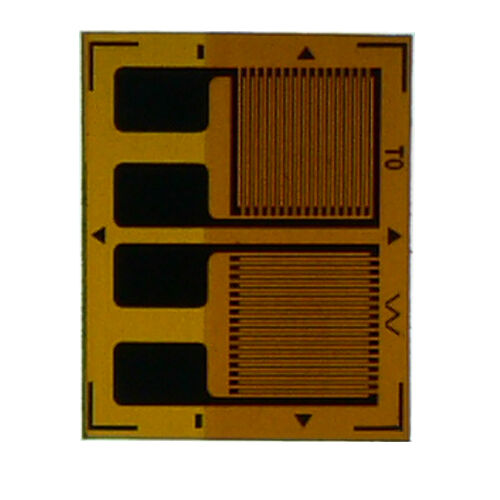
Multi-axis strain measurement capability in strain gauges for composites provides comprehensive stress analysis that captures the complex deformation patterns characteristic of composite structures under various loading conditions. This advanced measurement technology utilizes rosette configurations and specialized gauge geometries to simultaneously monitor strain components in multiple directions, enabling complete characterization of the stress state at critical measurement locations. The multi-axis capability addresses the anisotropic nature of composite materials, where mechanical properties and stress distributions vary significantly with fiber orientation and layup sequence. Advanced signal processing algorithms transform raw strain data from individual gauge elements into principal strain components, stress magnitudes, and directional information that engineers need for accurate structural assessments. The technology supports various rosette configurations, including rectangular, delta, and specialized patterns optimized for specific composite applications and loading scenarios. Synchronized data acquisition across all measurement axes ensures temporal correlation between strain components, enabling analysis of dynamic loading effects and vibration-induced stresses. The multi-axis measurement system provides enhanced sensitivity to detect off-axis loading conditions that might not be captured by single-direction measurements, improving detection of unexpected stress patterns that could indicate structural problems or design inadequacies. Calibration procedures account for cross-sensitivity between measurement axes, ensuring independent strain readings that accurately represent actual structural behavior. The technology integrates seamlessly with finite element analysis software, providing validation data for computational models and enabling correlation between predicted and measured stress distributions. Advanced data visualization tools present multi-axis strain data in intuitive formats that facilitate rapid interpretation of complex stress states and identification of critical measurement trends. The system supports both static and dynamic measurement modes, accommodating applications ranging from quasi-static load testing to high-frequency vibration monitoring. Quality assurance protocols verify measurement independence between axes and confirm system accuracy through controlled loading experiments with known stress states.

Get a Free Quote

Our representative will contact you soon.
Email
Name
Company Name
WhatsApp
Message
0/1000