
 EN
EN
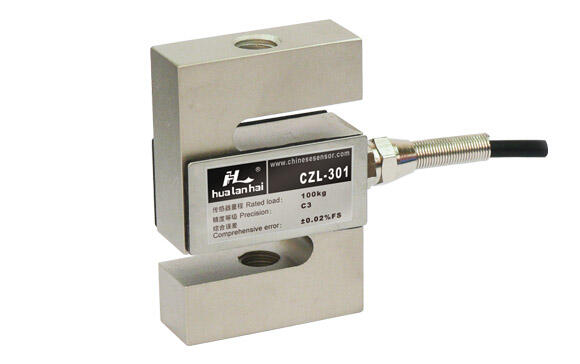
In modern industrial automation and precision measurement applications, understanding how applied loads are accurately detected and quantified has become critical for maintaining operational efficiency and safety standards. A force sensor represents a sophisticated transducer technology that converts mechanical force inputs into measurable electrical signals, enabling precise monitoring of compression, tension, and lateral forces across diverse industrial environments. These advanced measurement devices have revolutionized quality control processes, structural health monitoring systems, and automated manufacturing operations by providing real-time force data with exceptional accuracy and reliability.
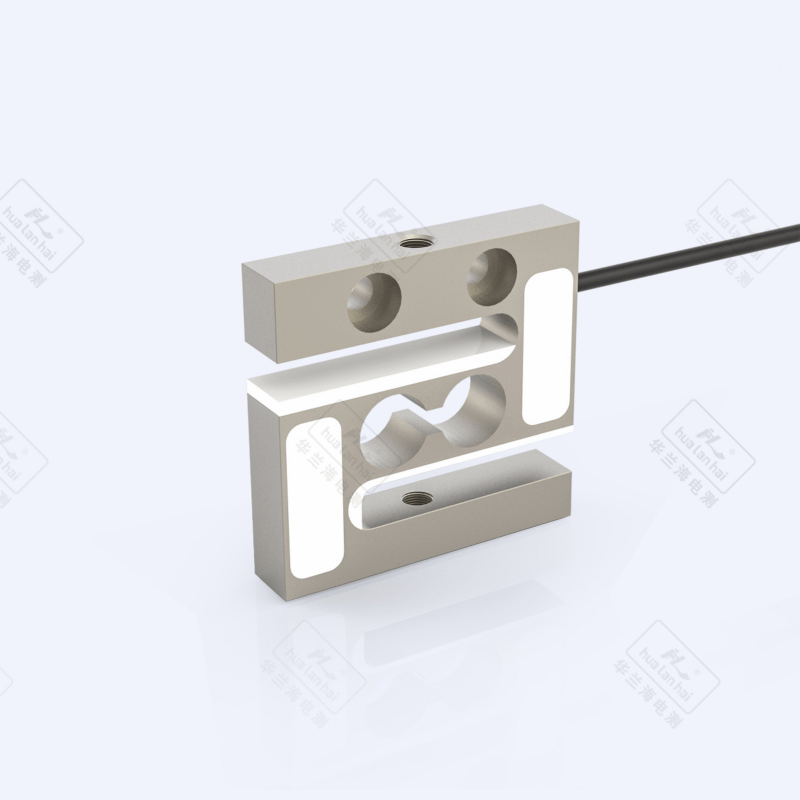
The fundamental operating principle of a force sensor relies on strain gauge technology, where microscopic deformation of sensing elements generates proportional electrical resistance changes that correlate directly with applied mechanical stress. Modern force sensors incorporate multiple strain gauges arranged in Wheatstone bridge configurations to maximize sensitivity while minimizing temperature drift and environmental interference effects. This sophisticated design approach ensures that force measurements remain stable and accurate across varying operational conditions, making these devices essential components in critical measurement applications where precision cannot be compromised.
Fundamental Operating Principles of Force Measurement Technology
Strain Gauge Integration and Signal Processing
The core technology behind every high-performance force sensor involves strategically positioned strain gauges bonded to specialized elastic elements that deform predictably under applied loads. When mechanical force is applied to the sensor structure, the elastic element undergoes microscopic deformation that causes corresponding changes in the electrical resistance of the attached strain gauges. These resistance variations are typically measured using precision Wheatstone bridge circuits that convert small resistance changes into proportional voltage signals suitable for electronic processing and display systems.
Advanced force sensor designs incorporate temperature compensation techniques and signal conditioning electronics to ensure measurement accuracy remains consistent across wide temperature ranges and varying environmental conditions. The electrical output signals generated by the strain gauge assembly are amplified and filtered to remove noise and interference, resulting in clean measurement data that accurately represents the applied force magnitude. This sophisticated signal processing approach enables force sensors to achieve measurement accuracies of 0.1% or better in many industrial applications.
Mechanical Design Considerations for Force Detection
The mechanical structure of a force sensor must be engineered to provide optimal strain distribution while maintaining structural integrity under maximum rated loads. Different force sensor configurations, including S-type, beam-type, and compression-type designs, are optimized for specific loading conditions and installation requirements. The elastic element geometry directly influences the sensor's sensitivity, linearity, and fatigue resistance, requiring careful engineering analysis to balance these competing performance parameters.
Material selection for force sensor construction involves choosing alloys with excellent elastic properties, low hysteresis, and resistance to creep and fatigue failure under repeated loading cycles. High-grade stainless steel and aluminum alloys are commonly used for sensor bodies due to their predictable elastic behavior and corrosion resistance properties. The manufacturing precision of the elastic element directly affects the sensor's measurement accuracy and long-term stability, requiring advanced machining techniques and quality control processes during production.
Applications and Implementation Strategies
Industrial Automation and Process Control
In automated manufacturing environments, force sensors provide essential feedback for controlling assembly processes, material handling operations, and quality assurance procedures. Robotic systems rely on force sensing technology to implement adaptive gripping strategies that prevent damage to delicate components while ensuring secure handling of heavy industrial parts. The integration of force sensors into automated production lines enables real-time process optimization and immediate detection of assembly defects or equipment malfunctions.
Process control applications utilize force sensor data to maintain consistent product quality by monitoring forces during forming, pressing, and joining operations. For example, automotive assembly lines employ force sensors to verify proper torque application during fastener installation and to detect incomplete welds or joint failures. The force sensor technology enables manufacturers to implement statistical process control methodologies that identify quality trends before they result in defective products reaching customers.
Structural Health Monitoring Systems
Critical infrastructure monitoring applications depend on force sensor technology to detect structural changes that could indicate potential safety hazards or maintenance requirements. Bridge monitoring systems use arrays of force sensors to measure load distribution and identify stress concentrations that might develop due to traffic patterns, environmental conditions, or structural aging. This continuous monitoring capability enables proactive maintenance scheduling and helps prevent catastrophic structural failures through early detection of developing problems.
Building and facility management systems incorporate force sensors to monitor elevator cable tensions, HVAC system loading, and seismic activity effects on structural components. The data collected by these monitoring systems provides valuable insights for optimizing building operations and ensuring occupant safety under varying load conditions. Emergency response systems can utilize force sensor data to assess structural integrity following natural disasters or other significant events that might compromise building safety.
Technical Specifications and Performance Characteristics
Measurement Range and Accuracy Parameters
Modern force sensor designs are available in measurement ranges spanning from millinewtons to millions of newtons, accommodating applications from precision laboratory measurements to heavy industrial load monitoring. The selection of appropriate measurement range involves balancing sensitivity requirements with overload protection needs, as force sensors typically provide best accuracy when operated within 10% to 100% of their rated capacity. Full-scale accuracy specifications for high-quality force sensors typically range from 0.05% to 0.5%, depending on the sensor design and intended application requirements.
Resolution and repeatability characteristics determine the sensor's ability to detect small force changes and provide consistent measurements under identical loading conditions. Advanced force sensor designs achieve resolution levels of 0.01% of full scale or better, enabling detection of minute force variations that are critical for precision assembly operations and scientific research applications. Long-term stability specifications indicate how measurement accuracy changes over extended periods of operation, with premium force sensors maintaining calibration accuracy within 0.1% per year under normal operating conditions.
Environmental Resistance and Durability Features
Industrial force sensor applications require robust construction that withstands harsh environmental conditions including temperature extremes, moisture, vibration, and chemical exposure. Operating temperature ranges for industrial force sensors typically extend from -40°C to +85°C, with specialized high-temperature versions capable of operation up to 200°C or higher for specific applications. Environmental protection ratings of IP65 or IP67 are standard for industrial force sensors, providing complete protection against dust ingress and temporary water immersion.
Fatigue resistance specifications define the sensor's ability to maintain accuracy under repeated loading cycles, which is critical for applications involving continuous or frequent force measurements. Quality force sensors are designed to withstand millions of loading cycles without significant degradation in measurement accuracy or mechanical integrity. Shock and vibration resistance capabilities ensure reliable operation in dynamic environments where equipment vibration or impact loading might affect measurement stability.
Installation and Integration Considerations
Mechanical Mounting and Load Introduction
Proper mechanical installation of force sensor systems requires careful attention to load alignment, mounting surface preparation, and environmental protection measures. The force sensor must be positioned so that applied loads are transmitted through the designated load path without introducing unwanted side loads or moments that could affect measurement accuracy. Mounting surfaces should be flat, parallel, and rigid enough to prevent deflection that might influence the force sensor's response characteristics.
Load introduction methods vary depending on the force sensor configuration and application requirements, with threaded connections, clevis mounts, and compression plates being common attachment approaches. The mechanical interface between the force sensor and surrounding structure must maintain proper load alignment while allowing for thermal expansion and minor installation tolerances. Protective measures such as environmental sealing, overload stops, and vibration isolation may be necessary depending on the specific installation environment and operational requirements.
Signal Conditioning and Data Acquisition
The electrical interface for force sensor systems typically requires signal conditioning equipment to amplify, filter, and convert the sensor's analog output signals into digital format suitable for computer-based monitoring and control systems. Modern force sensor installations often utilize smart transmitters or digital signal processors that provide local calibration, temperature compensation, and communication capabilities. These advanced signal conditioning systems can implement complex filtering algorithms and diagnostic functions that enhance measurement reliability and system troubleshooting capabilities.
Data acquisition systems must be configured to sample force sensor signals at appropriate rates while providing adequate resolution for the intended measurement accuracy. High-speed applications may require sampling rates of several kilohertz, while static force monitoring applications can operate effectively with much lower sampling frequencies. Proper grounding, shielding, and cable routing practices are essential for minimizing electrical interference and maintaining signal integrity in industrial environments with significant electromagnetic noise sources.
Calibration and Maintenance Procedures
Calibration Standards and Traceability
Accurate force sensor calibration requires reference standards that are traceable to national measurement institutes through an unbroken chain of calibrations with documented measurement uncertainties. Primary force standards typically utilize deadweight systems or hydraulic force generators that can apply known forces with uncertainties of 0.005% or better. Secondary standards may include previously calibrated force sensors or proving rings that provide practical reference forces for routine calibration procedures.
Calibration procedures involve applying a series of known forces across the sensor's measurement range and recording the corresponding electrical outputs to establish the relationship between applied force and signal response. Multi-point calibrations using at least five equally-spaced load points are typically performed to verify linearity and identify any hysteresis or repeatability issues. The calibration data is used to generate correction factors or calibration curves that enable accurate force measurements throughout the sensor's operating range.
Preventive Maintenance and Performance Monitoring
Regular maintenance procedures for force sensor systems include visual inspection of mechanical components, verification of electrical connections, and periodic accuracy checks using portable reference standards. Environmental factors such as corrosion, contamination, or mechanical wear can gradually affect sensor performance, making routine inspection and cleaning procedures important for maintaining long-term measurement accuracy. Documentation of maintenance activities and performance trends helps identify potential problems before they result in measurement errors or system failures.
Performance monitoring systems can continuously track force sensor output characteristics to detect drift, noise, or other anomalies that might indicate developing problems. Automated diagnostic routines can compare current sensor performance with historical baselines to identify gradual changes that might not be apparent during routine operation. This proactive approach to maintenance helps maximize sensor service life and ensures reliable operation in critical measurement applications where accuracy cannot be compromised.
FAQ
What factors affect the accuracy of force sensor measurements
Force sensor accuracy is influenced by several factors including temperature variations, mechanical alignment, electrical interference, and load application methods. Temperature effects can be minimized through proper compensation techniques, while mechanical factors require careful installation practices to ensure proper load alignment and eliminate side loads. Regular calibration and environmental protection help maintain optimal measurement accuracy over the sensor's service life.
How do you select the appropriate force sensor range for a specific application
The force sensor measurement range should be selected to provide adequate resolution for the smallest forces that need to be detected while including sufficient overload protection for maximum expected forces. Operating within 10% to 100% of the rated capacity typically provides the best accuracy and resolution. Consider both normal operating forces and potential overload conditions when selecting the appropriate measurement range for reliable long-term operation.
What are the advantages of digital force sensors compared to analog versions
Digital force sensors offer improved accuracy through internal signal processing, simplified installation with reduced wiring requirements, and enhanced diagnostic capabilities for system monitoring. Built-in temperature compensation and calibration storage eliminate external signal conditioning requirements while providing better noise immunity and communication capabilities. Digital interfaces also enable remote configuration and monitoring functions that simplify system integration and maintenance procedures.
How often should force sensors be recalibrated in industrial applications
Calibration intervals for industrial force sensors typically range from 6 months to 2 years depending on the application criticality, environmental conditions, and measurement accuracy requirements. Critical measurement applications may require more frequent calibration verification, while stable environments and non-critical applications may allow extended calibration intervals. Monitoring sensor performance trends helps optimize calibration scheduling based on actual drift characteristics rather than arbitrary time intervals.