
 EN
EN
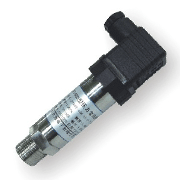
Selecting the right pressure sensor for industrial applications requires careful consideration of multiple technical and operational factors. Engineers and procurement specialists must evaluate various parameters to ensure optimal performance, reliability, and cost-effectiveness in their specific use cases. Understanding these selection criteria can significantly impact system efficiency, maintenance requirements, and overall project success.

Understanding Pressure Range and Measurement Requirements
Operating Pressure Specifications
The fundamental consideration when selecting a pressure sensor involves determining the exact pressure range for your application. Engineers must identify both the minimum and maximum pressure values that the sensor will encounter during normal operation. This includes understanding whether the system experiences static pressures, dynamic pressure fluctuations, or pulsating conditions that could affect measurement accuracy.
Overpressure capabilities represent another critical specification that influences pressure sensor selection. Industrial systems often experience pressure spikes during startup, shutdown, or emergency conditions. Selecting a pressure sensor with adequate overpressure rating ensures device longevity and prevents catastrophic failures that could compromise system safety and operational continuity.
Accuracy and Resolution Requirements
Measurement accuracy directly impacts system performance and process control effectiveness. Different applications demand varying levels of precision, from basic monitoring functions requiring modest accuracy to critical control loops demanding high-precision measurements. Understanding the relationship between accuracy specifications and cost helps optimize selection decisions.
Resolution capabilities determine the smallest pressure changes that a pressure sensor can detect and report. Applications involving fine pressure control or detecting minute pressure variations require sensors with superior resolution characteristics. This parameter becomes particularly important in research applications, pharmaceutical manufacturing, and precision industrial processes.
Environmental Conditions and Operating Parameters
Temperature Considerations
Operating temperature ranges significantly influence pressure sensor performance and longevity. High-temperature environments found in automotive, aerospace, and industrial furnace applications require specialized sensor designs with temperature-resistant materials and compensation circuits. Understanding both the ambient temperature and process media temperature helps determine appropriate sensor specifications.
Temperature compensation features become essential when pressure sensor installations experience significant temperature variations. Advanced sensors incorporate internal temperature compensation algorithms that maintain accuracy across wide temperature ranges, reducing measurement errors and improving system reliability in challenging thermal environments.
Chemical Compatibility and Corrosion Resistance
Process media characteristics play a crucial role in pressure sensor material selection. Corrosive chemicals, aggressive fluids, and contaminated environments require sensors constructed from compatible materials such as stainless steel, Hastelloy, or specialized coating systems. Understanding the chemical composition and concentration of process media prevents premature sensor failure.
Wetted material selection extends beyond basic corrosion resistance to include considerations of chemical reactivity, temperature stability, and cleaning compatibility. Food and pharmaceutical applications often require FDA-approved materials and surfaces that support frequent sanitization procedures without degrading sensor performance or accuracy.
Electrical and Output Characteristics
Signal Output Options
Modern pressure sensor designs offer various output signal formats to accommodate different control system requirements. Analog outputs including 4-20mA current loops and voltage signals provide direct interface compatibility with traditional control systems. Digital communication protocols such as HART, Foundation Fieldbus, and Ethernet enable advanced diagnostics and remote configuration capabilities.
Output signal stability and noise immunity become critical factors in electrically noisy industrial environments. Pressure sensor selections must consider electromagnetic interference, ground loop potential, and signal transmission distance requirements. Proper output selection ensures reliable data transmission and reduces troubleshooting complexity during installation and commissioning.
Power Supply Requirements
Power consumption characteristics affect pressure sensor integration into existing control systems and influence long-term operating costs. Battery-powered applications require sensors with ultra-low power consumption to maximize operational life between maintenance intervals. Understanding power requirements helps optimize system design and reduces infrastructure costs.
Supply voltage compatibility ensures seamless integration with existing control panels and instrumentation systems. Pressure sensor designs accommodate various supply voltages, from low-voltage DC systems to standard industrial voltage ranges. Proper voltage matching prevents installation complications and ensures optimal sensor performance throughout the operating range.
Mechanical Design and Installation Considerations
Physical Dimensions and Mounting Options
Space constraints often dictate pressure sensor physical specifications and mounting configurations. Compact installations in mobile equipment, aerospace applications, and retrofitted systems require sensors with minimal footprint and flexible mounting options. Understanding dimensional requirements early in the selection process prevents costly redesign efforts and installation delays.
Process connection standards vary significantly across industries and geographic regions. Common connection types include NPT threads, ISO metric threads, flanged connections, and sanitary fittings for food and pharmaceutical applications. Selecting appropriate process connections ensures proper sealing and mechanical integrity while facilitating maintenance access.
Vibration and Shock Resistance
Dynamic mechanical stresses from vibration, shock, and mechanical acceleration can significantly impact pressure sensor performance and longevity. Mobile applications, rotating machinery, and high-vibration industrial environments require sensors designed to withstand mechanical stresses without measurement degradation or premature failure.
Seismic and shock resistance specifications become particularly important for pressure sensor installations in earthquake-prone regions or applications exposed to mechanical impacts. Military, aerospace, and transportation applications often specify stringent shock resistance requirements that influence sensor construction and internal component design.
Cost Analysis and Lifecycle Considerations
Initial Investment and Total Cost of Ownership
Pressure sensor procurement decisions must balance initial purchase costs with long-term operational expenses including maintenance, calibration, and replacement costs. Higher-quality sensors with superior specifications often provide better value through reduced maintenance requirements and extended service life, offsetting higher initial investment costs.
Total cost of ownership analysis should include installation costs, commissioning expenses, spare parts availability, and technical support requirements. Pressure sensor manufacturers with comprehensive support networks and readily available replacement parts often provide superior long-term value despite potentially higher initial costs.
Maintenance and Calibration Requirements
Regular maintenance and calibration schedules significantly impact operational costs and system availability. Self-diagnosing pressure sensor designs with drift monitoring capabilities extend calibration intervals and reduce maintenance overhead. Understanding maintenance requirements helps optimize sensor selection for specific operational contexts and staffing capabilities.
Field calibration capabilities enable on-site adjustments without removing sensors from service, reducing downtime and maintenance costs. Advanced pressure sensor designs incorporate user-friendly calibration procedures and provide clear diagnostic information that simplifies troubleshooting and reduces technical support requirements.
Industry-Specific Requirements and Standards
Regulatory Compliance and Certifications
Industry-specific regulations and safety standards significantly influence pressure sensor selection criteria. Hazardous area applications require intrinsically safe or explosion-proof certifications that ensure safe operation in potentially explosive atmospheres. Understanding applicable regulations prevents costly compliance issues and ensures safe system operation.
Quality certifications such as ISO 9001, AS9100 for aerospace applications, and FDA approvals for food and pharmaceutical use demonstrate manufacturer commitment to quality and regulatory compliance. These certifications often represent prerequisites for pressure sensor procurement in regulated industries and government applications.
Application-Specific Performance Requirements
Different industries impose unique performance requirements that influence pressure sensor selection. Automotive applications emphasize durability and cost optimization, while aerospace applications prioritize weight reduction and reliability. Understanding industry-specific priorities helps optimize selection decisions and ensures compatibility with application requirements.
Process industries such as oil and gas, chemical processing, and power generation have established best practices and preferred specifications for pressure sensor installations. Familiarity with industry standards and common practices facilitates selection decisions and ensures compatibility with existing maintenance procedures and personnel training.
Advanced Features and Future Considerations
Smart Sensor Capabilities
Modern pressure sensor designs incorporate intelligent features such as self-diagnostics, predictive maintenance indicators, and remote configuration capabilities. These advanced features provide operational benefits through reduced downtime, improved troubleshooting efficiency, and enhanced system visibility. Understanding available smart features helps optimize sensor selection for evolving operational requirements.
Wireless communication capabilities enable pressure sensor integration into Industrial Internet of Things applications and remote monitoring systems. These features provide operational flexibility and reduce installation costs in challenging locations while enabling centralized monitoring and data analysis capabilities.
Integration with Control Systems
Seamless integration with existing control systems requires careful consideration of communication protocols, data formats, and configuration procedures. Pressure sensor compatibility with popular control system platforms reduces engineering effort and accelerates commissioning timelines. Understanding integration requirements early in the selection process prevents compatibility issues and reduces project risks.
Scalability considerations become important for expanding operations or evolving system requirements. Pressure sensor selections that accommodate future expansion or modification requirements provide operational flexibility and protect initial investments. This forward-thinking approach optimizes long-term system value and reduces future upgrade costs.
FAQ
What is the most important factor when selecting a pressure sensor for industrial applications
The most critical factor is ensuring the pressure sensor operating range matches your application requirements with appropriate safety margins. This includes considering both normal operating pressures and potential overpressure conditions. Additionally, environmental factors such as temperature range and chemical compatibility must align with your process conditions to ensure reliable long-term performance.
How does temperature affect pressure sensor accuracy and selection
Temperature variations can significantly impact pressure sensor accuracy through thermal effects on sensing elements and electronics. High-quality pressure sensor designs incorporate temperature compensation to maintain accuracy across specified temperature ranges. When selecting sensors for extreme temperature applications, consider both ambient and process temperatures, and choose sensors with appropriate temperature ratings and compensation features.
What are the key differences between analog and digital pressure sensor outputs
Analog pressure sensor outputs such as 4-20mA provide simple, direct measurement signals compatible with traditional control systems but offer limited diagnostic capabilities. Digital outputs enable advanced features including self-diagnostics, remote configuration, and enhanced accuracy through digital signal processing. Digital pressure sensor options also support multiple communication protocols and provide better noise immunity in electrically challenging environments.
How do I determine the required accuracy specifications for my pressure sensor application
Required accuracy depends on your specific application needs and control requirements. Critical process control applications typically require higher accuracy than basic monitoring functions. Consider the impact of measurement uncertainty on your process outcomes and safety requirements. Factor in environmental conditions, as temperature variations and vibration can affect accuracy. Generally, selecting pressure sensor accuracy that is 3-5 times better than your process tolerance provides adequate margin for reliable operation.
Table of Contents
- Understanding Pressure Range and Measurement Requirements
- Environmental Conditions and Operating Parameters
- Electrical and Output Characteristics
- Mechanical Design and Installation Considerations
- Cost Analysis and Lifecycle Considerations
- Industry-Specific Requirements and Standards
- Advanced Features and Future Considerations
-
FAQ
- What is the most important factor when selecting a pressure sensor for industrial applications
- How does temperature affect pressure sensor accuracy and selection
- What are the key differences between analog and digital pressure sensor outputs
- How do I determine the required accuracy specifications for my pressure sensor application