
 EN
EN
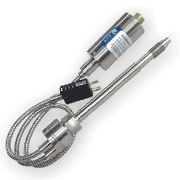
Industrial automation and safety systems rely heavily on accurate monitoring and control mechanisms to ensure optimal performance and prevent catastrophic failures. A pressure sensor serves as a critical component in these systems, providing real-time data that enables precise control of various industrial processes. From manufacturing plants to chemical processing facilities, the implementation of advanced pressure sensor technology has revolutionized how industries approach automation and safety protocols. Understanding the fundamental role of these devices in modern industrial applications reveals their importance in maintaining operational efficiency while protecting personnel and equipment.
Understanding Pressure Sensor Technology in Industrial Applications
Basic Principles of Pressure Measurement
The fundamental operation of a pressure sensor involves converting mechanical pressure into an electrical signal that can be interpreted by control systems. These devices utilize various technologies including piezoresistive, capacitive, and strain gauge principles to detect pressure changes with exceptional accuracy. Modern pressure sensor designs incorporate advanced materials and manufacturing techniques that enable them to withstand harsh industrial environments while maintaining consistent performance over extended periods. The precision of these measurements directly impacts the effectiveness of automated systems and safety protocols.
Industrial pressure sensors must accommodate a wide range of operating conditions including extreme temperatures, corrosive chemicals, and high-vibration environments. The selection of appropriate sensor technology depends on specific application requirements such as pressure range, accuracy specifications, response time, and environmental conditions. Understanding these technical considerations ensures that the chosen pressure sensor will deliver reliable performance throughout its operational lifespan while contributing to overall system efficiency and safety.
Types and Classifications of Pressure Sensors
Different industrial applications require specific types of pressure sensors designed to meet unique operational demands. Absolute pressure sensors measure pressure relative to a perfect vacuum and are essential for applications requiring precise atmospheric pressure compensation. Gauge pressure sensors measure pressure relative to atmospheric pressure and are commonly used in hydraulic systems and pneumatic controls. Differential pressure sensors compare two pressure inputs and are crucial for flow measurement and filter monitoring applications.
The physical construction of a pressure sensor varies significantly based on its intended application and operating environment. High-temperature applications require sensors with specialized materials and protective housings that can withstand extreme thermal conditions without compromising measurement accuracy. Chemical processing environments necessitate pressure sensors with corrosion-resistant materials and protective coatings that prevent degradation from aggressive chemicals while maintaining long-term reliability.

Enhancing Automation Through Precise Pressure Monitoring
Process Control Integration
Modern automation systems depend on accurate pressure measurements to maintain optimal process parameters and ensure consistent product quality. A pressure sensor integrated into a control loop provides continuous feedback that enables automated adjustments to pumps, valves, and other process equipment. This real-time monitoring capability allows systems to respond immediately to pressure variations, preventing deviations from desired operating conditions and minimizing waste or quality issues.
The integration of pressure sensor data with programmable logic controllers and distributed control systems creates sophisticated automation networks that can manage complex industrial processes with minimal human intervention. These systems utilize advanced algorithms that analyze pressure trends and patterns to predict potential issues before they occur, enabling proactive maintenance and operational adjustments that maximize efficiency and minimize downtime.
Predictive Maintenance Capabilities
Advanced pressure sensor systems contribute significantly to predictive maintenance strategies by providing continuous monitoring of equipment condition indicators. Gradual changes in system pressure can indicate developing problems such as pump wear, seal deterioration, or pipeline restrictions long before these issues result in system failures. This early detection capability enables maintenance teams to schedule repairs during planned downtime rather than responding to emergency situations.
The data collected from pressure sensors can be analyzed using machine learning algorithms that identify subtle patterns and anomalies in system behavior. This analytical capability transforms raw pressure measurements into actionable intelligence that guides maintenance decisions and optimizes equipment performance. Organizations implementing comprehensive pressure monitoring strategies report significant reductions in unplanned downtime and maintenance costs while achieving improved overall equipment effectiveness.
Safety Enhancement Through Pressure Sensor Implementation
Critical Safety System Integration
Safety systems in industrial facilities rely on pressure sensor technology to detect potentially dangerous conditions and initiate appropriate protective responses. Overpressure protection systems use pressure sensors to monitor vessel and pipeline pressures, automatically triggering relief valves or emergency shutdowns when pressure limits are exceeded. These safety interlocks prevent catastrophic failures that could result in equipment damage, environmental releases, or personnel injuries.
Emergency shutdown systems incorporate multiple pressure sensors in redundant configurations to ensure reliable detection of hazardous conditions even if individual sensors fail. The reliability and response time of these safety systems directly depend on the quality and performance characteristics of the pressure sensors used in their implementation. Regular testing and calibration of safety-critical pressure sensors ensures that protective systems will function correctly when needed to prevent accidents or mitigate their consequences.
Environmental and Personnel Protection
Environmental protection systems utilize pressure sensor technology to monitor containment systems and detect potential leaks or releases before they become significant environmental hazards. Pressure monitoring of storage tanks, pipelines, and containment structures provides early warning of structural integrity issues that could lead to environmental contamination. This proactive approach to environmental protection helps organizations comply with regulatory requirements while minimizing their environmental impact.
Personnel safety systems incorporate pressure sensors to monitor breathing air quality in confined spaces and detect potentially dangerous atmosphere conditions. Pressure differentials in ventilation systems are monitored to ensure adequate air circulation and prevent the accumulation of hazardous vapors or gases. These applications demonstrate the versatility of pressure sensor technology in protecting both human health and environmental quality across diverse industrial settings.
Advanced Applications and Industry-Specific Solutions
Chemical and Petrochemical Industry Applications
The chemical and petrochemical industries present some of the most challenging applications for pressure sensor technology due to the presence of corrosive chemicals, extreme temperatures, and hazardous atmospheres. Specialized pressure sensors designed for these environments incorporate advanced materials such as ceramic diaphragms and exotic alloys that resist chemical attack while maintaining measurement accuracy. Process optimization in chemical plants depends on precise pressure control throughout reaction vessels, distillation columns, and pipeline networks.
High-temperature applications in petrochemical processing require pressure sensors capable of operating reliably at temperatures exceeding standard industrial ranges. These specialized devices enable monitoring and control of critical processes such as catalytic cracking, hydroprocessing, and thermal treating that operate at extreme conditions. The ability to maintain accurate pressure measurements under these demanding conditions is essential for process safety and product quality control.
Power Generation and Energy Sector Implementation
Power generation facilities utilize pressure sensor technology throughout their operations, from boiler systems and turbine monitoring to cooling water circulation and emissions control systems. Steam pressure monitoring in power plants requires sensors capable of withstanding high temperatures and pressures while providing accurate measurements for turbine control and safety systems. The reliability of these measurements directly impacts plant efficiency and safety performance.
Nuclear power facilities implement pressure sensors in safety-critical applications where failure could have severe consequences. These applications require sensors with exceptional reliability, accuracy, and environmental qualification to ensure proper function under normal and accident conditions. The rigorous qualification and testing requirements for nuclear applications drive continuous improvements in pressure sensor technology that benefit other industrial sectors as well.
Technology Trends and Future Developments
Smart Sensor Integration and IoT Connectivity
The evolution of pressure sensor technology includes the integration of smart capabilities that enable advanced diagnostics, wireless communication, and integration with Internet of Things platforms. Smart pressure sensors incorporate microprocessors that can perform self-diagnostics, compensate for environmental effects, and communicate detailed status information to control systems. This intelligence enhances the reliability and maintainability of pressure measurement systems while reducing installation and maintenance costs.
Wireless pressure sensor networks eliminate the need for extensive wiring installations in remote or difficult-to-access locations while providing real-time monitoring capabilities. These systems can operate on battery power for extended periods and communicate measurement data through various wireless protocols including WiFi, Bluetooth, and cellular networks. The flexibility of wireless pressure sensor systems enables monitoring applications that were previously impractical or cost-prohibitive using traditional wired installations.
Advanced Materials and Manufacturing Techniques
Ongoing developments in materials science and manufacturing technology continue to expand the capabilities and applications of pressure sensor technology. Advanced ceramic materials provide exceptional chemical resistance and high-temperature performance while maintaining excellent mechanical properties. Micro-electromechanical systems manufacturing techniques enable the production of miniaturized pressure sensors with enhanced performance characteristics and reduced power consumption.
Additive manufacturing technologies are beginning to influence pressure sensor design and production, enabling the creation of complex geometries and integrated functionality that were previously impossible using conventional manufacturing methods. These technological advances promise to deliver pressure sensors with improved performance, reliability, and cost-effectiveness across a broad range of industrial applications.
Implementation Best Practices and System Optimization
Selection Criteria and Application Engineering
Successful implementation of pressure sensor technology requires careful consideration of application-specific requirements including pressure range, accuracy specifications, environmental conditions, and system integration needs. The selection process should evaluate factors such as temperature compensation, long-term stability, response time, and compatibility with existing control systems. Proper application engineering ensures that the chosen pressure sensor will deliver reliable performance throughout its operational life while meeting all system requirements.
Installation considerations play a crucial role in pressure sensor performance, including proper mounting techniques, pressure connection design, and protection from environmental hazards. Impulse line design and maintenance can significantly impact measurement accuracy, particularly in applications involving high-temperature or corrosive media. Following manufacturer recommendations and industry best practices for installation and maintenance ensures optimal pressure sensor performance and longevity.
Calibration and Maintenance Strategies
Regular calibration and maintenance of pressure sensor systems ensures continued accuracy and reliability throughout their operational life. Calibration programs should be based on application criticality, manufacturer recommendations, and regulatory requirements where applicable. Advanced pressure sensor systems may incorporate self-diagnostic capabilities that can detect calibration drift or component degradation, enabling condition-based maintenance strategies that optimize maintenance intervals while ensuring measurement accuracy.
Documentation and record-keeping practices for pressure sensor calibration and maintenance activities support regulatory compliance and provide valuable data for optimizing maintenance strategies. Trend analysis of calibration data can reveal patterns that indicate developing problems or changing system conditions that may require attention. This proactive approach to pressure sensor maintenance helps prevent measurement errors that could impact product quality, safety, or environmental compliance.
FAQ
What factors should be considered when selecting a pressure sensor for industrial automation applications
The selection of a pressure sensor for industrial automation requires evaluation of several critical factors including pressure range, accuracy requirements, operating temperature range, chemical compatibility, and response time specifications. Environmental conditions such as humidity, vibration, and electromagnetic interference must also be considered to ensure reliable operation. Additionally, system integration requirements including output signal type, power supply compatibility, and communication protocols should be evaluated to ensure seamless integration with existing control systems.
How do pressure sensors contribute to predictive maintenance strategies in industrial facilities
Pressure sensors enable predictive maintenance by providing continuous monitoring of system conditions that can indicate developing equipment problems before they result in failures. Gradual changes in pressure readings can reveal issues such as pump wear, valve leakage, or pipeline restrictions that would otherwise go undetected until causing system downtime. Advanced analytics applied to pressure sensor data can identify subtle patterns and trends that predict maintenance needs, allowing organizations to schedule repairs during planned outages rather than responding to emergency situations.
What safety applications benefit most from advanced pressure sensor technology
Safety applications that benefit significantly from advanced pressure sensor technology include overpressure protection systems, emergency shutdown systems, and leak detection systems. These applications require high reliability, fast response times, and redundant configurations to ensure proper function when needed to prevent accidents. Chemical processing facilities, power plants, and oil and gas operations rely heavily on pressure sensor technology for safety system implementation that protects personnel, equipment, and the environment from potentially catastrophic events.
How does wireless pressure sensor technology improve monitoring capabilities in remote locations
Wireless pressure sensor technology eliminates the need for extensive wiring installations in remote or hazardous locations while providing real-time monitoring capabilities that were previously impractical or cost-prohibitive. These systems can operate independently on battery power and transmit data through various wireless communication protocols to central monitoring systems. This capability enables monitoring of remote equipment, temporary installations, and rotating machinery where traditional wired connections are not feasible, significantly expanding the scope of pressure monitoring applications in industrial facilities.
Table of Contents
- Understanding Pressure Sensor Technology in Industrial Applications
- Enhancing Automation Through Precise Pressure Monitoring
- Safety Enhancement Through Pressure Sensor Implementation
- Advanced Applications and Industry-Specific Solutions
- Technology Trends and Future Developments
- Implementation Best Practices and System Optimization
-
FAQ
- What factors should be considered when selecting a pressure sensor for industrial automation applications
- How do pressure sensors contribute to predictive maintenance strategies in industrial facilities
- What safety applications benefit most from advanced pressure sensor technology
- How does wireless pressure sensor technology improve monitoring capabilities in remote locations