
 EN
EN
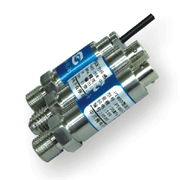
Industrial environments present some of the most challenging conditions for measurement equipment, yet accurate pressure monitoring remains critical for operational safety and efficiency. A pressure sensor must withstand extreme temperatures, corrosive chemicals, mechanical vibrations, and electromagnetic interference while maintaining precise readings. Understanding how these devices perform under harsh conditions is essential for engineers and facility managers who rely on consistent data for process control and equipment protection.

The performance of a pressure sensor in demanding industrial applications depends on multiple factors including sensor design, materials selection, protective housing, and calibration protocols. Modern industrial pressure sensors incorporate advanced technologies such as strain gauge elements, piezoresistive chips, and capacitive sensing mechanisms to deliver reliable measurements even when exposed to aggressive operating conditions. These sophisticated devices must balance sensitivity requirements with durability to ensure long-term operational success.
Industrial facilities across petrochemical, steel production, power generation, and manufacturing sectors depend on robust pressure measurement solutions that can operate continuously without frequent maintenance or replacement. The economic impact of sensor failure extends beyond replacement costs to include production downtime, safety risks, and potential equipment damage. Therefore, understanding the specific performance characteristics of pressure sensors in harsh environments becomes crucial for making informed equipment selection decisions.
Temperature Resistance and Thermal Stability
High Temperature Performance Characteristics
Extreme temperature conditions represent one of the most significant challenges for pressure sensor performance in industrial environments. High-temperature applications such as furnace monitoring, engine testing, and molten metal processing require sensors capable of maintaining accuracy at temperatures exceeding 500°C. A specialized pressure sensor designed for these conditions incorporates heat-resistant materials including stainless steel diaphragms, ceramic insulators, and high-temperature electronic components that prevent thermal drift and maintain calibration stability.
The thermal response of a pressure sensor involves both immediate temperature effects and long-term thermal cycling impacts. Immediate effects include changes in material properties, electronic component behavior, and mechanical expansion that can alter sensor output characteristics. Long-term thermal cycling creates fatigue stress in sensor components, potentially leading to gradual calibration drift or complete sensor failure if not properly addressed through robust design and material selection.
Advanced high-temperature pressure sensors utilize compensation algorithms and temperature-stable sensing elements to minimize thermal effects on measurement accuracy. These devices often incorporate dual-sensor configurations where one element measures pressure while another monitors temperature, enabling real-time compensation calculations that maintain measurement precision across the operating temperature range.
Low Temperature Challenges and Solutions
Cryogenic and low-temperature industrial applications present unique challenges for pressure sensor performance, including material brittleness, thermal contraction effects, and reduced electronic component functionality. A pressure sensor operating in liquefied gas storage, refrigeration systems, or arctic installations must maintain flexibility and accuracy at temperatures as low as -200°C while preventing ice formation and thermal shock damage.
Low-temperature pressure sensor designs incorporate specialized materials such as austenitic stainless steels, specialized elastomers, and cold-resistant electronic components that maintain mechanical properties and electrical performance at extreme cold conditions. These sensors often feature heated housings or thermal barriers to prevent process media from freezing within the sensor assembly and causing measurement errors or mechanical damage.
Thermal shock resistance becomes particularly important in applications where pressure sensors experience rapid temperature changes during normal operation. Proper sensor selection involves evaluating thermal cycling specifications, material compatibility, and installation methods that minimize thermal stress while maintaining measurement accuracy and long-term reliability.
Chemical Resistance and Corrosion Protection
Corrosive Media Compatibility
Chemical processing industries expose pressure sensors to highly corrosive substances including acids, bases, solvents, and reactive gases that can rapidly degrade standard sensor materials. A pressure sensor intended for these applications must incorporate corrosion-resistant materials such as Hastelloy, tantalum, or specialized ceramic coatings that provide long-term protection against chemical attack while maintaining measurement accuracy and mechanical integrity.
The selection of wetted materials for a pressure sensor involves careful consideration of the specific chemical composition, concentration, temperature, and exposure duration of the process media. Incompatible material combinations can result in rapid sensor degradation, measurement drift, or catastrophic failure that compromises process safety and operational efficiency. Material compatibility charts and chemical resistance databases provide essential guidance for proper sensor specification in corrosive environments.
Advanced pressure sensor designs for corrosive applications often incorporate isolation techniques such as diaphragm seals, chemical barriers, or remote mounting configurations that separate sensitive sensor components from direct contact with aggressive process media. These protective measures extend sensor life while maintaining measurement accuracy and reducing maintenance requirements in challenging chemical environments.
Protective Coatings and Surface Treatments
Surface protection technologies play a crucial role in extending pressure sensor life in chemically aggressive environments. Specialized coatings including PTFE, ceramic films, and electroless nickel provide additional barriers against chemical attack while maintaining the mechanical properties necessary for accurate pressure measurement. A pressure sensor with appropriate surface treatments can operate reliably in environments that would quickly destroy unprotected devices.
The application process for protective coatings requires precise control of coating thickness, adhesion properties, and surface preparation to ensure uniform protection without compromising sensor sensitivity or response time. Quality control procedures for coated pressure sensors include adhesion testing, porosity evaluation, and accelerated corrosion testing to verify protective effectiveness under simulated operating conditions.
Regular inspection and maintenance protocols for pressure sensors in corrosive environments include visual examination of protective coatings, calibration verification, and replacement scheduling based on coating degradation patterns. Preventive maintenance programs help identify potential coating failures before they compromise sensor performance or create safety risks in critical applications.
Mechanical Durability and Vibration Resistance
Shock and Impact Tolerance
Industrial machinery and mobile equipment subject pressure sensors to significant mechanical stresses including shock loads, impact forces, and continuous vibration that can damage sensing elements or create measurement errors. A pressure sensor designed for these conditions incorporates robust mechanical construction, shock-absorbing materials, and protective housings that maintain accuracy and functionality under severe mechanical stress conditions.
The mechanical design of vibration-resistant pressure sensors includes features such as reinforced diaphragms, damped sensing elements, and secure mounting systems that prevent resonance conditions and mechanical fatigue. These design elements work together to isolate sensitive components from external mechanical disturbances while maintaining the mechanical coupling necessary for accurate pressure measurement.
Testing protocols for mechanical durability include shock testing, vibration endurance evaluation, and fatigue cycling to verify sensor performance under simulated operating conditions. These tests help establish operating limits and maintenance intervals for pressure sensors in mechanically demanding applications such as heavy machinery, transportation equipment, and industrial processing systems.
Mounting and Installation Considerations
Proper installation techniques significantly impact pressure sensor performance and longevity in harsh mechanical environments. Mounting methods must provide secure mechanical attachment while minimizing stress concentration and thermal coupling that could affect measurement accuracy. A pressure sensor installation should include vibration isolation, thermal barriers, and protective enclosures appropriate for the specific operating environment.
Flexible mounting systems and shock-absorbing interfaces help isolate pressure sensors from excessive mechanical stress while maintaining the rigid coupling necessary for accurate pressure transmission. These mounting solutions often incorporate elastomeric isolators, mechanical dampeners, or tuned mass systems that reduce transmitted vibration energy without compromising measurement response time or accuracy.
Installation guidelines for pressure sensors in harsh environments include torque specifications, thread sealant recommendations, and orientation requirements that optimize performance while preventing mechanical damage. Proper installation procedures also address electrical connection protection, cable routing, and environmental sealing to ensure long-term reliability in demanding industrial applications.
Electrical Performance and EMI Resistance
Electromagnetic Interference Mitigation
Industrial environments often contain high levels of electromagnetic interference from motors, welding equipment, radio transmitters, and switching circuits that can disrupt pressure sensor electronics and create measurement errors. A pressure sensor operating in these conditions requires robust EMI shielding, filtered power supplies, and noise-resistant signal processing to maintain measurement accuracy and prevent false readings or system malfunctions.
EMI protection strategies for industrial pressure sensors include shielded cable assemblies, grounded enclosures, and filtered electronic circuits that attenuate electromagnetic disturbances while preserving measurement signals. These protective measures must balance EMI immunity with sensitivity requirements to ensure optimal performance in electrically noisy industrial environments.
Advanced pressure sensor designs incorporate digital signal processing, frequency filtering, and error correction algorithms that help distinguish between legitimate pressure signals and electromagnetic interference. These intelligent systems can identify and compensate for various types of electrical disturbances while maintaining measurement accuracy and system reliability.
Power Supply Stability and Grounding
Stable electrical power and proper grounding are essential for consistent pressure sensor performance in industrial applications where power quality may be compromised by heavy electrical loads, switching transients, and ground loops. A pressure sensor electrical system must include power conditioning, surge protection, and isolation techniques that prevent electrical disturbances from affecting measurement accuracy or damaging sensor electronics.
Power supply requirements for industrial pressure sensors include voltage regulation, current limiting, and transient suppression to protect sensitive electronic components from electrical overstress. These power conditioning systems often incorporate filters, regulators, and isolation transformers that provide clean, stable power even in electrically challenging environments.
Grounding and shielding protocols for pressure sensor installations include single-point grounding, shield termination procedures, and equipotential bonding that minimize ground loops and electrical noise while maintaining safety requirements. Proper electrical installation practices help ensure reliable pressure sensor operation and prevent electrical interference from compromising measurement quality.
Calibration and Maintenance in Harsh Conditions
Field Calibration Procedures
Maintaining measurement accuracy for pressure sensors operating in harsh industrial environments requires regular calibration procedures that can be performed safely and efficiently under challenging field conditions. Field calibration techniques include portable reference standards, in-situ verification methods, and remote calibration systems that enable accuracy verification without removing sensors from critical process applications.
A pressure sensor calibration program for harsh environments must account for environmental effects on reference standards, safety considerations for personnel performing calibration work, and scheduling requirements that minimize process disruption. Calibration procedures should include temperature compensation, drift analysis, and uncertainty evaluation appropriate for the specific operating conditions and measurement requirements.
Advanced calibration systems for industrial pressure sensors incorporate automated calibration sequences, data logging capabilities, and remote monitoring functions that reduce manual intervention while maintaining traceability and documentation requirements. These systems help ensure consistent calibration quality while minimizing exposure risks for maintenance personnel in hazardous environments.
Predictive Maintenance Strategies
Predictive maintenance approaches for pressure sensors in harsh environments utilize condition monitoring data, performance trending, and failure analysis to optimize maintenance intervals and prevent unexpected sensor failures. These strategies help minimize maintenance costs while ensuring reliable pressure measurement for critical industrial processes and safety systems.
Condition monitoring parameters for industrial pressure sensors include calibration drift rates, electrical performance indicators, and mechanical integrity assessments that provide early warning of potential failures. A pressure sensor monitoring system can track these parameters continuously and alert maintenance personnel when intervention is required to prevent measurement degradation or system failure.
Failure mode analysis for pressure sensors in harsh environments helps identify common degradation mechanisms, establish replacement criteria, and optimize maintenance procedures for specific applications. This analysis supports evidence-based maintenance decisions that balance reliability requirements with maintenance costs while ensuring continued safe operation of industrial processes.
Selection Criteria for Harsh Environment Applications
Performance Specification Evaluation
Selecting appropriate pressure sensors for harsh industrial environments requires comprehensive evaluation of performance specifications including accuracy, stability, response time, and environmental limits. A pressure sensor specification review must consider both immediate performance requirements and long-term reliability needs to ensure successful operation throughout the intended service life.
Key performance parameters for harsh environment pressure sensors include temperature coefficients, pressure overload capability, long-term stability specifications, and environmental immunity ratings that indicate suitability for specific operating conditions. These specifications should be evaluated against actual operating requirements with appropriate safety margins to account for unexpected conditions or specification uncertainties.
Comparative analysis of competing pressure sensor technologies helps identify optimal solutions for specific applications by evaluating performance trade-offs, cost considerations, and supplier capabilities. This analysis should include laboratory testing, field trial results, and user experience data to support informed selection decisions for critical applications.
Cost-Benefit Analysis and Total Ownership
Economic evaluation of pressure sensor options for harsh environments must consider total cost of ownership including initial purchase price, installation costs, maintenance requirements, and replacement frequency over the expected service life. A comprehensive cost analysis helps justify premium sensor technologies that provide superior reliability and reduced maintenance requirements in demanding applications.
Life cycle cost modeling for industrial pressure sensors includes failure rate predictions, maintenance labor costs, and production impact assessments that quantify the economic benefits of reliable measurement systems. These models help optimize sensor selection decisions by comparing long-term costs and benefits of different technology options and supplier alternatives.
Risk assessment for pressure sensor applications includes evaluation of failure consequences, safety implications, and business continuity requirements that influence sensor selection priorities. A pressure sensor failure in critical applications can result in safety hazards, environmental releases, or production losses that far exceed sensor replacement costs, making reliability a primary selection criterion.
FAQ
What temperature ranges can industrial pressure sensors typically withstand
Industrial pressure sensors designed for harsh environments typically operate across temperature ranges from -200°C to +600°C, depending on the specific sensor technology and application requirements. Standard industrial sensors commonly handle -40°C to +125°C, while specialized high-temperature units can withstand up to +600°C for molten metal and furnace applications. The actual temperature capability depends on sensor construction materials, electronic components, and protective housing design.
How does electromagnetic interference affect pressure sensor accuracy
Electromagnetic interference can cause measurement errors, signal noise, and false readings in pressure sensors by disrupting electronic circuits and signal transmission. A well-designed pressure sensor incorporates EMI shielding, filtered electronics, and noise-resistant signal processing to maintain accuracy in electrically noisy environments. Proper installation with shielded cables and grounding helps minimize EMI effects on sensor performance.
What maintenance intervals are recommended for pressure sensors in corrosive environments
Maintenance intervals for pressure sensors in corrosive environments typically range from 3-12 months depending on the severity of chemical exposure, sensor design, and application criticality. Regular maintenance should include calibration verification, visual inspection of protective coatings, and electrical performance testing. A pressure sensor with appropriate chemical resistance materials and protective treatments may operate reliably for several years with proper maintenance protocols.
How do vibration and shock loads impact pressure sensor reliability
Vibration and shock loads can cause mechanical fatigue, calibration drift, and premature failure in pressure sensors through repeated stress cycles and impact damage to sensing elements. Industrial pressure sensors designed for harsh mechanical environments incorporate reinforced construction, vibration dampening, and shock-resistant materials that maintain accuracy under severe mechanical stress. Proper mounting techniques and vibration isolation help extend sensor life in mechanically demanding applications.
Table of Contents
- Temperature Resistance and Thermal Stability
- Chemical Resistance and Corrosion Protection
- Mechanical Durability and Vibration Resistance
- Electrical Performance and EMI Resistance
- Calibration and Maintenance in Harsh Conditions
- Selection Criteria for Harsh Environment Applications
-
FAQ
- What temperature ranges can industrial pressure sensors typically withstand
- How does electromagnetic interference affect pressure sensor accuracy
- What maintenance intervals are recommended for pressure sensors in corrosive environments
- How do vibration and shock loads impact pressure sensor reliability