
 EN
EN
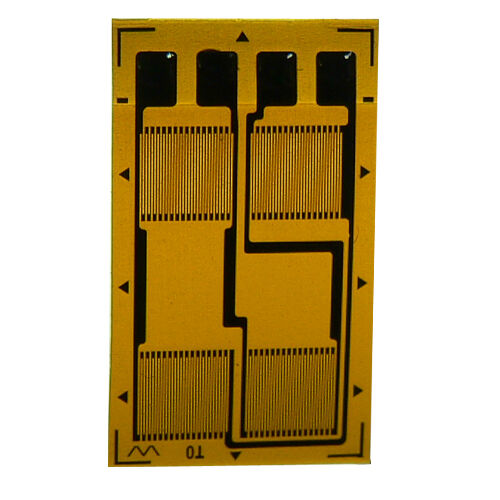
Structural monitoring has become increasingly critical in modern engineering applications, where precise measurement of mechanical deformation can mean the difference between safe operation and catastrophic failure. A strain gauge represents one of the most reliable and accurate methods for detecting minute changes in structural integrity across various industries. These sophisticated sensors provide engineers with real-time data about stress, load distribution, and potential failure points in everything from bridges and buildings to aircraft components and manufacturing equipment. The implementation of advanced strain measurement technology has revolutionized how professionals approach structural health monitoring, offering unprecedented levels of accuracy and reliability in critical applications.
Fundamentals of Strain Measurement Technology
Physical Principles Behind Strain Detection
The operational foundation of any strain gauge relies on the fundamental principle that electrical resistance changes proportionally when a conductor is subjected to mechanical deformation. When a material experiences stress or strain, its geometric properties alter in predictable ways, causing measurable variations in electrical characteristics. This relationship, known as the piezoresistive effect, enables precise quantification of mechanical changes through electrical measurements. Modern strain gauge technology exploits this principle by using metallic foils or semiconductor materials that exhibit consistent and repeatable resistance changes under applied loads.
The sensitivity of a strain gauge depends on its gauge factor, which represents the ratio of relative change in electrical resistance to the mechanical strain applied. High-quality sensors typically exhibit gauge factors between 2.0 and 4.0 for metallic designs, while semiconductor varieties can achieve much higher sensitivities. Temperature compensation mechanisms are integrated into advanced designs to ensure measurement accuracy across varying environmental conditions. Understanding these fundamental principles helps engineers select appropriate sensors for specific monitoring applications and interpret collected data with confidence.
Construction and Material Considerations
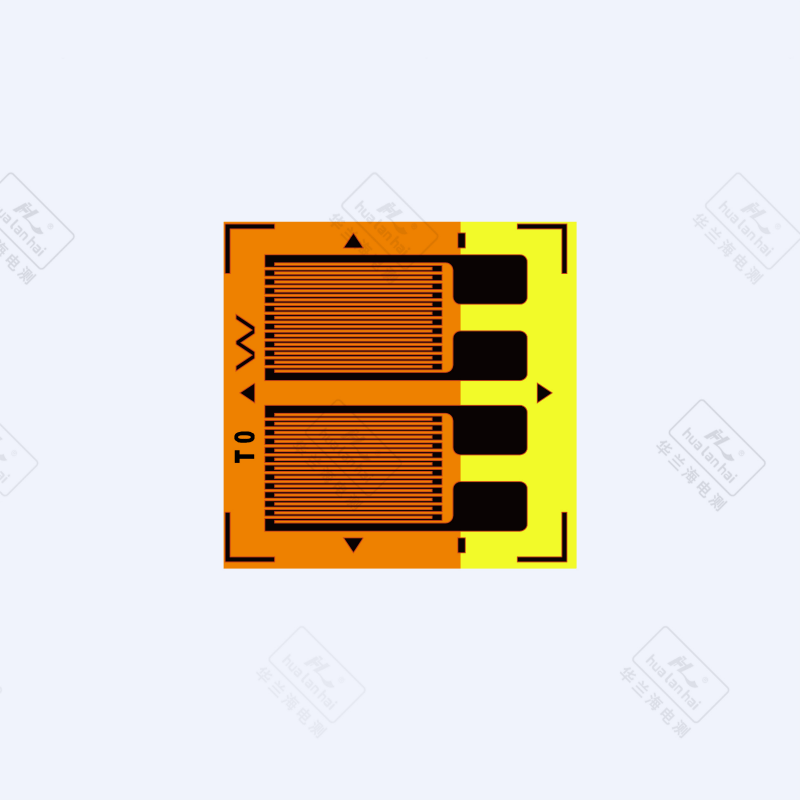
Professional-grade strain gauge construction involves sophisticated manufacturing processes that ensure long-term stability and measurement precision. The sensing element typically consists of a thin metallic foil pattern etched or deposited onto a flexible substrate material such as polyimide or fiberglass. This substrate must maintain dimensional stability while allowing the sensing element to deform in response to applied strain. Advanced manufacturing techniques ensure uniform thickness and precise geometric patterns that directly impact measurement accuracy and repeatability.
Material selection plays a crucial role in determining the operational characteristics and environmental suitability of each sensor. Common sensing materials include constantan, karma alloy, and various nickel-chromium compositions, each offering distinct advantages for specific applications. The substrate material must exhibit appropriate thermal expansion characteristics to match the test specimen while providing adequate electrical insulation. Protective coatings and encapsulation materials further enhance durability and extend operational life in harsh environments. These construction considerations directly influence the accuracy and reliability of structural monitoring systems.
Applications in Structural Health Monitoring
Bridge and Infrastructure Monitoring
Modern bridge monitoring systems extensively utilize strain gauge technology to assess structural integrity and detect potential problems before they become critical safety issues. Engineers strategically position multiple sensors throughout bridge structures to monitor stress distribution under various loading conditions, including traffic patterns, wind loads, and thermal effects. Long-term monitoring programs using these sensors provide valuable data about structural behavior over time, enabling predictive maintenance strategies that optimize safety while minimizing costs. The ability to detect minute changes in structural response allows engineers to identify developing problems months or years before visible damage appears.
Infrastructure monitoring applications extend beyond bridges to include tunnels, dams, high-rise buildings, and industrial facilities where structural integrity directly impacts public safety. A strain gauge installation on critical structural elements provides continuous assessment of load distribution and stress concentration points. Data collected from these monitoring systems helps engineers validate design assumptions, optimize maintenance schedules, and extend operational life while maintaining safety standards. Real-time monitoring capabilities enable immediate response to unusual loading conditions or environmental events that might compromise structural integrity.
Aerospace and Automotive Testing
The aerospace industry relies heavily on strain measurement technology for both component testing and operational monitoring applications. Aircraft structures experience complex loading patterns during flight operations, making accurate strain measurement essential for ensuring safety and optimizing performance. Engineers use multiple strain gauge installations to validate structural designs, monitor fatigue accumulation, and assess the impact of service conditions on critical components. Flight test programs extensively utilize these sensors to gather data about actual operating stresses compared to design predictions.
Automotive applications similarly depend on precise strain measurement for vehicle development, safety testing, and performance optimization. Crash test programs use numerous sensors to understand energy absorption characteristics and structural behavior during impact events. Durability testing relies on strain measurement to assess component life under simulated service conditions, while performance tuning applications use real-time data to optimize suspension systems, chassis design, and aerodynamic components. The high accuracy and rapid response characteristics of modern sensors make them indispensable tools for automotive engineering applications.
Accuracy Enhancement Through Advanced Implementation
Multi-Point Measurement Systems
Implementing multiple strain gauge locations throughout a structure significantly improves monitoring accuracy by providing comprehensive coverage of critical stress points and load paths. Strategic sensor placement allows engineers to create detailed maps of structural behavior under various loading conditions, identifying areas of stress concentration and potential failure modes. Multi-point systems enable cross-validation of measurements, improving overall reliability and confidence in collected data. Advanced data acquisition systems can simultaneously monitor hundreds of individual sensors, creating comprehensive structural health monitoring networks.
The integration of multiple measurement points also enables advanced analysis techniques such as modal analysis, load path identification, and dynamic response characterization. Engineers can correlate measurements from different locations to understand how loads transfer through structural elements and identify changes in structural behavior over time. This comprehensive approach to strain measurement provides early warning of developing problems and enables more accurate assessment of remaining structural life. Proper calibration and synchronization of multi-point systems ensure measurement consistency across all monitoring locations.
Environmental Compensation Techniques
Environmental factors such as temperature fluctuations, humidity changes, and electromagnetic interference can significantly impact strain gauge accuracy if not properly addressed through compensation techniques. Temperature compensation typically involves using dummy gauges or integrated temperature sensors to account for thermal expansion effects in both the sensor and test structure. Advanced signal conditioning systems automatically adjust measurements based on environmental conditions, maintaining accuracy across wide temperature ranges and varying atmospheric conditions.
Modern strain gauge installations incorporate sophisticated filtering and signal processing techniques to minimize the impact of electrical interference and mechanical vibrations on measurement accuracy. Proper grounding, shielding, and cable routing practices help maintain signal integrity over long transmission distances. Digital signal processing algorithms can further enhance measurement quality by filtering out noise while preserving important structural response characteristics. These compensation techniques are essential for achieving the high accuracy levels required in critical structural monitoring applications.
Installation Best Practices for Maximum Accuracy
Surface Preparation and Bonding Techniques
Proper surface preparation represents a critical factor in achieving accurate and reliable strain gauge measurements throughout the operational life of monitoring systems. The bonding surface must be thoroughly cleaned, degreased, and prepared according to manufacturer specifications to ensure optimal adhesion between the sensor and test structure. Surface roughness, contamination, and oxidation can all compromise bond quality and introduce measurement errors. Professional installation procedures typically involve multiple cleaning stages using appropriate solvents and abrasive techniques to achieve the required surface condition.
Adhesive selection and application techniques directly impact both short-term accuracy and long-term reliability of strain gauge installations. Different structural materials and environmental conditions require specific adhesive formulations to ensure proper strain transfer and dimensional stability. Curing procedures must be carefully controlled to achieve optimal bond strength while avoiding thermal stress that could introduce measurement bias. Quality control procedures during installation help verify proper bonding and identify potential problems before they affect measurement accuracy.
Electrical Connections and Signal Integrity
Maintaining signal integrity from the sensor through the complete measurement chain requires careful attention to electrical connection techniques and cable management practices. Proper soldering or connector techniques ensure reliable electrical contact while minimizing thermal stress on the strain gauge element. Wire routing and support methods must prevent mechanical stress on connections while providing adequate protection from environmental factors. Professional installations typically include strain relief provisions and environmental protection measures that extend operational life and maintain measurement accuracy.
Grounding and shielding practices play essential roles in minimizing electrical interference that can compromise measurement accuracy in industrial environments. Proper grounding techniques help eliminate ground loops while maintaining electrical safety standards. Shielded cables and proper termination methods reduce the impact of electromagnetic interference from nearby equipment. Digital communication protocols and advanced signal conditioning systems further enhance noise immunity while preserving measurement resolution and accuracy.
Data Analysis and Interpretation Methods
Statistical Analysis Techniques
Effective structural monitoring requires sophisticated data analysis techniques that can extract meaningful information from large datasets collected by strain gauge systems over extended periods. Statistical analysis methods help identify trends, detect anomalies, and quantify measurement uncertainty in ways that support engineering decision-making processes. Time series analysis techniques enable engineers to separate long-term structural changes from short-term variations caused by environmental factors or operational conditions. These analytical approaches provide the foundation for predictive maintenance strategies and structural life assessment programs.
Advanced statistical methods such as regression analysis, correlation studies, and pattern recognition algorithms help engineers understand relationships between different measurement parameters and structural behavior patterns. Machine learning techniques are increasingly being applied to strain gauge data to identify subtle changes that might indicate developing structural problems. Quality control procedures ensure data integrity while statistical validation methods help quantify measurement confidence levels and identify potential sensor problems before they compromise monitoring effectiveness.
Integration with Structural Models
Modern structural monitoring systems increasingly integrate measured strain data with finite element models and analytical predictions to provide comprehensive understanding of structural behavior and performance. This integration enables engineers to validate design assumptions, calibrate analytical models, and improve prediction accuracy for future loading scenarios. Measured data helps identify discrepancies between predicted and actual structural response, leading to improved design methods and more accurate life assessment procedures.
Model updating techniques use measured strain data to refine structural parameters and improve analytical accuracy for damage detection and remaining life assessment applications. These integrated approaches enable more sophisticated analysis of structural condition and provide better predictions of future performance under various loading scenarios. Real-time model updating capabilities allow monitoring systems to adapt to changing structural conditions and provide early warning of developing problems that might compromise safety or performance.
Troubleshooting Common Measurement Issues
Identifying and Resolving Installation Problems
Even with careful installation procedures, strain gauge systems can experience various problems that compromise measurement accuracy and require systematic troubleshooting approaches. Common installation issues include poor surface preparation, inadequate bonding, thermal stress during curing, and mechanical damage during handling. Diagnostic techniques such as resistance measurements, insulation testing, and visual inspection help identify specific problems and guide appropriate corrective actions. Understanding typical failure modes enables more effective troubleshooting and helps prevent similar problems in future installations.
Systematic diagnostic procedures help distinguish between sensor problems, installation issues, and signal conditioning system faults that might affect measurement accuracy. Baseline measurements taken immediately after installation provide reference points for identifying changes in sensor characteristics over time. Regular calibration checks and performance verification procedures help maintain measurement accuracy while identifying sensors that require replacement or repair. Proper documentation of installation procedures and performance history supports effective troubleshooting and quality control efforts.
Environmental Factor Management
Environmental conditions can significantly impact strain gauge performance and measurement accuracy, requiring ongoing monitoring and management throughout operational life. Temperature cycling, moisture exposure, chemical contamination, and mechanical vibration all represent potential sources of measurement error that must be addressed through appropriate protection and compensation measures. Regular environmental monitoring helps identify conditions that might compromise sensor performance while enabling proactive maintenance actions to preserve measurement quality.
Protective measures such as environmental enclosures, moisture barriers, and vibration isolation systems help minimize the impact of adverse conditions on strain gauge performance. Regular inspection and maintenance procedures ensure protective systems remain effective throughout operational life. Understanding the relationship between environmental factors and measurement accuracy enables more effective system design and helps optimize monitoring performance under challenging operating conditions.
FAQ
What factors determine the accuracy of strain gauge measurements
Several critical factors influence the accuracy of strain gauge measurements, including sensor quality, installation procedures, environmental conditions, and signal conditioning systems. The gauge factor stability, temperature coefficient, and linearity characteristics of the sensor itself establish fundamental accuracy limits. Proper surface preparation, adhesive selection, and bonding techniques ensure accurate strain transfer from the test structure to the sensing element. Environmental compensation methods help maintain accuracy across varying temperature and humidity conditions, while high-quality signal conditioning systems preserve measurement resolution and minimize noise interference.
How often should strain gauge calibration be performed
Calibration frequency for strain gauge systems depends on application requirements, environmental conditions, and regulatory standards that govern specific industries. Critical safety applications may require monthly or quarterly calibration verification, while less demanding applications might only need annual calibration checks. Environmental factors such as temperature cycling, moisture exposure, and mechanical vibration can accelerate sensor drift and require more frequent calibration verification. Regular zero checks and span verification procedures help identify sensors that require recalibration or replacement before measurement accuracy becomes compromised.
What are the most common causes of strain gauge measurement errors
Common sources of measurement error in strain gauge applications include poor bonding quality, thermal effects, electrical interference, and mechanical damage to sensors or cables. Inadequate surface preparation or improper adhesive curing can result in incomplete strain transfer and measurement bias. Temperature variations cause thermal expansion effects that must be properly compensated to maintain accuracy. Electrical noise from nearby equipment, poor grounding practices, or damaged cables can introduce measurement errors that compromise data quality. Regular system checks and proper maintenance procedures help identify and correct these common error sources.
Can strain gauges be used for long-term structural monitoring applications
Modern strain gauge technology is well-suited for long-term structural monitoring applications when properly selected, installed, and maintained according to manufacturer specifications. High-quality sensors designed for permanent installation can provide reliable measurements for many years under appropriate environmental conditions. Proper protection from moisture, temperature extremes, and mechanical damage helps ensure long-term stability and measurement accuracy. Regular calibration verification and preventive maintenance procedures help identify potential problems before they compromise monitoring effectiveness, enabling successful long-term monitoring programs that provide valuable data about structural condition and performance over extended periods.