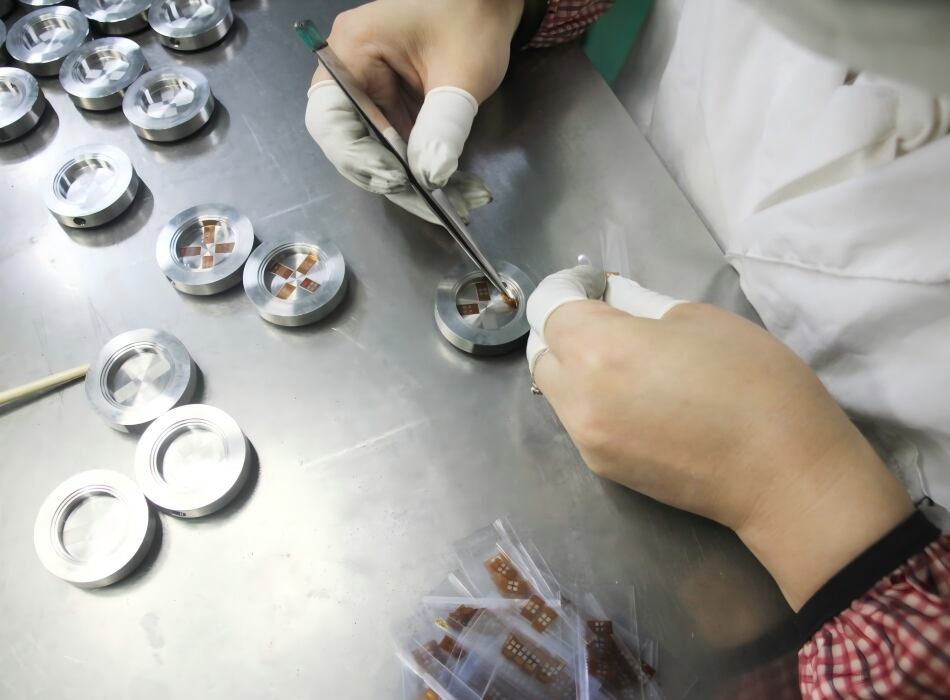
Advanced Material Engineering
Leading bending plate manufacturers distinguish themselves through sophisticated material engineering approaches that optimize performance characteristics for demanding industrial applications. The selection and treatment of raw materials represents a critical factor in determining the ultimate performance, durability, and reliability of bending plates used in high-stress metal forming operations. Professional manufacturers collaborate with metallurgists and materials scientists to develop proprietary alloy compositions and heat treatment protocols that enhance hardness, toughness, and wear resistance while maintaining dimensional stability under extreme loading conditions. Advanced steel grades incorporating specific alloying elements provide superior performance compared to standard materials, offering increased resistance to cracking, deformation, and surface degradation. Heat treatment processes such as vacuum hardening, cryogenic treatment, and precision tempering create optimal microstructures that maximize component longevity while maintaining consistent mechanical properties throughout the entire cross-section. Surface engineering technologies including specialized coatings, ion implantation, and plasma treatments further enhance performance by reducing friction, preventing corrosion, and improving wear characteristics. These advanced material treatments enable bending plates to maintain their accuracy and surface finish even after millions of forming cycles, providing exceptional value through extended service life and reduced replacement frequency. Quality manufacturers conduct extensive material testing using advanced techniques such as scanning electron microscopy, X-ray diffraction analysis, and mechanical property evaluation to verify that each batch meets stringent performance specifications. This scientific approach to material engineering ensures customers receive components capable of handling their most challenging applications while maintaining consistent performance over extended periods. The benefits of advanced material engineering extend to improved process efficiency, reduced maintenance requirements, and enhanced product quality for end users. Companies investing in superior materials often discover that the initial cost premium is quickly offset by reduced operational costs and improved productivity, making these components an excellent long-term investment for serious manufacturers.

 EN
EN