
 EN
EN
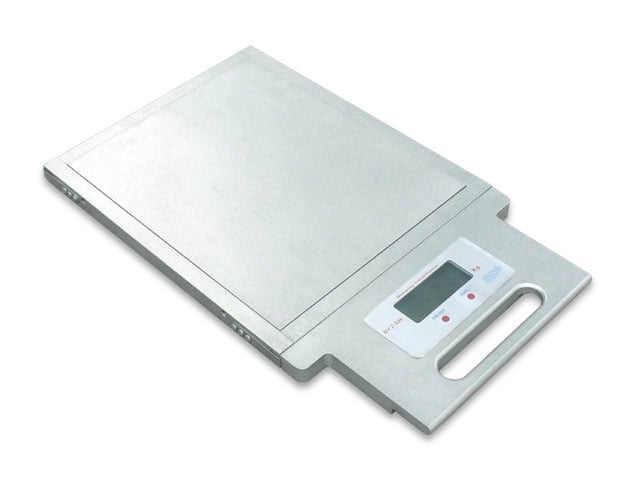
Vehicle weight enforcement is a critical function for highway safety, regulatory compliance, and infrastructure protection. Overloaded vehicles pose serious risks to road conditions, bridge integrity, and public safety, yet traditional fixed weigh stations often struggle to catch violations in real-time or at remote locations. This is where portable axle scales become an essential tool for modern enforcement operations. A portable axle scale allows inspectors to measure individual axle weights quickly and accurately without requiring vehicles to stop at permanent facilities, enabling decentralized, flexible enforcement strategies that adapt to traffic patterns and risk areas.
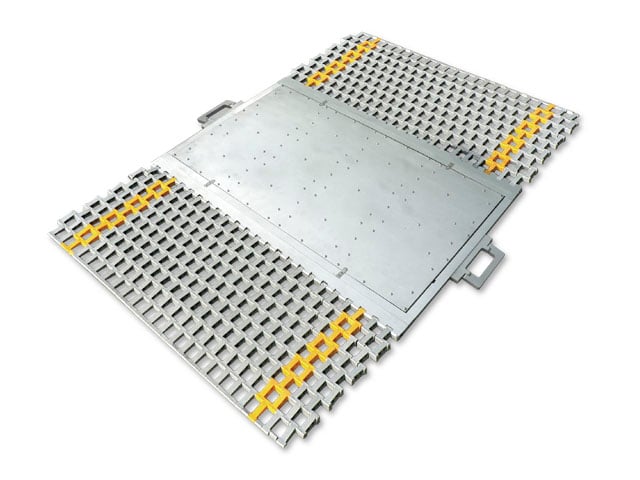
Deploying a portable axle scale at strategic checkpoints transforms how agencies approach vehicle weight compliance. Rather than waiting for overweight vehicles to arrive at fixed stations, enforcement teams can position portable axle scales at temporary control points, parking areas, rest stops, or construction zones to catch violations where they occur. This proactive deployment strategy reduces enforcement gaps, increases violation detection rates, and sends a strong deterrent signal to operators who might otherwise ignore weight limits. The portability and ease of setup mean that agencies can respond quickly to emerging problem routes or seasonal traffic changes without capital investment in new infrastructure.
Understanding Portable Axle Scale Technology
Core Components and Measurement Principles
A portable axle scale operates on the principle of distributed load measurement, where individual axles of a vehicle are weighed separately as they pass over or rest on calibrated sensor plates. Unlike a single platform scale that measures total vehicle weight, a portable axle scale provides granular data on each axle's load, which is essential for enforcing axle weight regulations that differ from gross vehicle weight limits. Each portable axle scale typically comprises lightweight aluminum or steel platforms with embedded load cells, digital indicators, and data logging capabilities. The portable axle scale system integrates wireless transmission in many models, allowing inspectors to record measurements and generate compliance reports on mobile devices without being tethered to equipment.
Portability and Deployment Advantages
The defining characteristic of a portable axle scale is its compact, lightweight design that allows one or two personnel to transport and deploy it within minutes. Traditional fixed installations require permanent construction, electrical infrastructure, and significant downtime for maintenance, whereas a portable axle scale can be moved between sites daily and stored in a standard vehicle or trailer. This flexibility means that enforcement agencies can stretch limited resources further by concentrating portable axle scale operations in high-risk corridors, near sensitive infrastructure like bridges, or at temporary enforcement events without geographic constraints. Modern portable axle scale designs feature modular platforms that stack or fold for transport, reducing storage footprint while maintaining the structural rigidity and accuracy required for legal weight enforcement.
Operational Benefits and Enforcement Impact
Enhanced Detection and Deterrence
Enforcement agencies deploying a portable axle scale report significant increases in violation detection compared to traditional reliance on fixed weigh stations alone. Because a portable axle scale can be positioned at unexpected locations and moved frequently, carriers cannot predict where they will encounter checks, raising perceived enforcement likelihood. This unpredictability is a powerful deterrent; operators who know a portable axle scale might appear at any checkpoint become more diligent about load management and weight compliance. The ability to conduct surprise weight checks at multiple locations throughout a jurisdiction amplifies the behavioral change across the entire carrier population, not just those who pass through fixed stations.
Operational Efficiency and Cost-Effectiveness
Operating a portable axle scale is substantially less expensive than maintaining permanent weigh station infrastructure. Staffing costs drop because a portable axle scale requires minimal personnel and can be deployed during peak violation periods rather than running continuously. Each portable axle scale scales quickly, allowing inspectors to check multiple vehicles in a single shift and process high-volume traffic without bottlenecks. Over time, the cost per violation detected using a portable axle scale often falls below fixed-station economics, especially in jurisdictions covering large geographic areas or managing seasonal traffic fluctuations where permanent installations would remain underutilized.
Integration with Modern Enforcement Workflows
Data Management and Compliance Documentation
Contemporary portable axle scale systems feature digital data capture, cloud storage, and automated reporting that eliminate paper-based recording errors and streamline evidence collection for violations. Inspectors using a portable axle scale can immediately generate printable citations, photos, and weight records that stand up to legal scrutiny and reduce dispute resolution time. Integration with regional weight enforcement databases means that violations detected using a portable axle scale feed into comprehensive compliance profiles that help identify repeat offenders and target enforcement resources more strategically. This data accumulation strengthens the overall enforcement network by creating transparency and accountability that encourages operator compliance.
Scalability and Multi-Site Coordination
Agencies managing multiple jurisdictions or high-traffic corridors benefit from deploying multiple portable axle scale units across different sites simultaneously. Unlike fixed infrastructure that requires separate capital projects at each location, purchasing additional portable axle scale units allows agencies to expand coverage incrementally and coordinate enforcement at strategic bottlenecks. This scalability is especially valuable for states managing interstate highways, agricultural corridors, or construction zones where weight violations cluster in predictable patterns. A portable axle scale's modular nature means that agencies can redistribute units based on risk analysis, seasonal demand, or emerging enforcement priorities without the rigidity of permanent installations.
FAQ
What accuracy standards must a portable axle scale meet for legal enforcement?
A portable axle scale used for enforcement must comply with NIST Handbook 44 standards or equivalent national metrology requirements to ensure measurements are admissible in legal proceedings. Most portable axle scale manufacturers design systems with accuracy tolerances of plus or minus 0.5 to 1 percent to exceed legal thresholds and withstand challenge in court. Agencies should verify that any portable axle scale meets their jurisdiction's specific certification and recalibration intervals, typically annual or bi-annual, to maintain defensibility.
How quickly can a portable axle scale operation detect and document violations?
A modern portable axle scale typically measures a vehicle's axle weights in 30 to 60 seconds once the vehicle is properly positioned. Data recording, photo documentation, and citation printing take an additional minute or two, allowing experienced teams to process 30 to 50 vehicles per eight-hour shift depending on traffic flow and violation rates. The efficiency advantage of a portable axle scale over fixed installations grows during high-volume periods when the portable axle scale's rapid cycle time prevents queue backlogs.
Can a portable axle scale operate in various weather and road conditions?
Most portable axle scale systems are designed with weather-resistant enclosures and durable materials that function reliably in rain, extreme temperatures, and rough terrain. However, operators must ensure that the surfaces where the portable axle scale is deployed are level and stable to maintain measurement accuracy, and some conditions like flooding or extreme cold may require operational adjustments. Equipment manufacturers provide guidance on environmental limits and maintenance procedures to keep a portable axle scale performing within specification across diverse deployment scenarios.